Starting a vanilla export business from Bali in 2027 essentially requires three foundations: legal business standing for export, access to a consistent and verified vanilla supply source, and an understanding of destination-market requirements. This article answers questions commonly asked by small and medium businesses looking to enter this sector, with an emphasis on practical steps — not promises of specific profit figures or prices, since vanilla prices are highly volatile and depend on market conditions at the time of transaction.
What Legal Steps Are Needed to Start Exporting Vanilla?
In general, a business wanting to export vanilla from Indonesia needs to hold proper business legality (such as an NIB business registration number and related trading permits), and to meet agricultural commodity export requirements including a phytosanitary certificate from the quarantine authority. Dried vanilla is generally classified under HS code 0905, and export documents such as an invoice, packing list, and certificate of origin are typically requested by customs as well as the importer in the destination country. Because regulations can change and differ by destination country, new businesses are advised to consult with a party already experienced in handling vanilla export documentation on a regular basis.
Setting Up a Reliable Supply Source
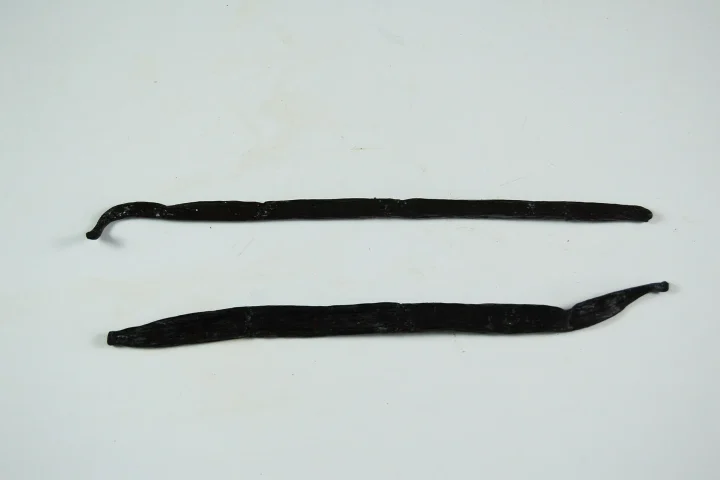
For an SME that doesn’t yet have its own plantation, the most realistic option is to partner with an exporter or collector that already has a farmer network and a consistent curing process, rather than buying directly from many small farmers with no uniform quality standard. This approach helps maintain grade consistency — generally assessed by pod length, moisture content, and appearance — even though the detailed standard still differs between end buyers, so the specification needs to be agreed in writing for every contract.
How Do You Find International Buyers?
- Attend food commodity or spice trade fairs attended by buyers from Europe, the US, and Japan
- Build a clear digital presence — a website, product catalog, and quality documentation — so buyers can carry out initial due diligence
- Start with small sample orders to build trust before negotiating a large volume
- Consider partnering with an experienced exporter for your first orders, while building your own capacity and network
A Real Opportunity for SMEs in This Sector
Global demand for natural vanilla from the food, beverage, and cosmetics industries remains in place, and Indonesia — including Bali — is one of the alternative origins buyers look to when diversifying their supply sources. But this opportunity comes with real challenges: working capital to buy stock during harvest season, warehousing and storage that meet moisture standards, and the patience to build a quality reputation with international buyers, who typically need several order cycles before committing long term.
| Aspect | What You Need to Prepare |
|---|---|
| Business legality | NIB registration, export permit, tax compliance |
| Export documents | Phytosanitary certificate, invoice, packing list, HS 0905 |
| Supply source | Farmer/collector partnership with a clear curing standard |
| Market access | Buyer network, samples, quality documentation |
Common Mistakes Beginners Should Avoid
Common mistakes include promising a fixed price to a buyer without checking current market conditions, buying large quantities of stock without verifying quality and moisture content, and overlooking proper storage, causing the vanilla to lose moisture or aroma before it reaches the buyer. Building a quality-control process from the start — even at a small scale — will be far cheaper than dealing with buyer claims down the line.
For a more complete picture of the ins and outs of exporting vanilla from Bali, please read our Bali vanilla export guide, and learn about scaling strategies in our article scaling Bali vanilla export operations: strategies for growth by 2027.
Start With Measured Steps
A vanilla export business isn’t something that can be run at large scale right away without experience. The most realistic approach is to start with a partnership with an experienced party, learn the document and grading flow firsthand, and then build your own buyer network gradually. Our team is open to discussing sourcing partnerships or an initial consultation for SMEs serious about entering this sector.
How Much Starting Capital Is Realistically Needed?
We won’t state a specific capital figure here, since capital needs depend heavily on the scale of business you want to run, the vanilla market price at the time, and whether the business partners with an experienced exporter or builds its own supply chain from scratch. What can be said with certainty is that this business needs working capital to buy stock during harvest season, storage costs that meet moisture standards, and a reserve fund to bridge the time gap between buying stock and receiving payment from export buyers.
Do You Need to Own Your Own Vanilla Plantation?
No. Most successful vanilla exporters don’t own their own plantation, but instead build a partnership network with farmers or collectors who already run a curing process to standard. Owning a plantation can give more control over quality, but it also adds operational complexity and risk that isn’t always worth it for an SME just starting out. A partnership approach lets a business focus on the more strategic aspects: maintaining quality standards, building buyer relationships, and managing export documentation.
How Do You Assess Whether an Export Opportunity Is Worth Pursuing?
Before committing to an export opportunity — whether from a buyer offering a contract or a supplier offering stock — a business should verify three things: clarity on the specification requested (grade, moisture content, volume), clarity on payment terms (schedule, method, currency), and whether the delivery timeline is realistic against available production or supply capacity. An opportunity that looks very profitable but is vague on these three aspects should be treated with caution.
Building a Reputation With International Buyers
International buyers, especially from Europe, the United States, and Japan, generally need several consistent transaction cycles before they’re willing to place a large-volume contract with a new supplier. This consistency covers on-time delivery, document accuracy, and stable quality across shipments. SMEs just starting out should view their first few transactions as an investment in building reputation, not purely as a short-term profit opportunity.
For SMEs wanting to understand the vanilla product structure typically requested by export buyers, please review our products page and our grade B vanilla beans for extraction page as a reference for common market specifications.
How Do You Put Together a Simple Business Plan for Vanilla Export?
A business plan for a vanilla export venture should cover at least four elements: a target buyer segment (for example, mid-scale food manufacturers in Europe or raw-material importers in the United States), a realistic volume projection based on accessible supply capacity, a cash-flow estimate accounting for the time gap between buying stock and getting paid by the buyer, and a risk-mitigation plan for a scenario where the market price moves unfavorably after stock has been purchased. Putting these elements in writing, even in simple form, helps a new business make more measured decisions than relying on optimism alone.
Should You Join an Exporter Association or Community?
Joining a spice exporter association or an export-SME community can give access to the latest regulatory information, training, and sometimes the chance to meet buyers through jointly organized trade fairs. For new businesses, this kind of network is often a faster source of practical learning than trying to understand the entire export process alone without a mentor or peers already experienced in the same sector.
Ready to Request a Written Quote?
Specifications, sample terms, and pricing for your shipment are confirmed in writing by our desk once we understand your grade, volume, and destination port. Contact our export desk via WhatsApp at +62 811-3941-4563 or email [email protected] to start a written request.