
Indonesian vanilla export FAQ: 100 B2B buyer questions
The questions importers, extractors, flavour houses and private-label brands ask most before buying Indonesian vanilla — grades, curing, pricing, MOQ, documents, shipping and risk.
Grades, vanillin and quality specifications (11)
What grades of Indonesian vanilla beans are exported from Bali, Alor and Papua?
Indonesian exporters work with three commercial tiers: Grade A gourmet whole beans, Grade B extract-grade beans, and an informal industrial tier of cuts and splits. Each tier is defined by pod length, moisture content, flexibility and visible defects rather than by marketing language. Grade A serves gourmet retail, patisserie and premium bakery; Grade B feeds extraction lines. Lot-level specifications are confirmed in writing before every quotation.
What exactly qualifies as Grade A gourmet vanilla for export from Bali?
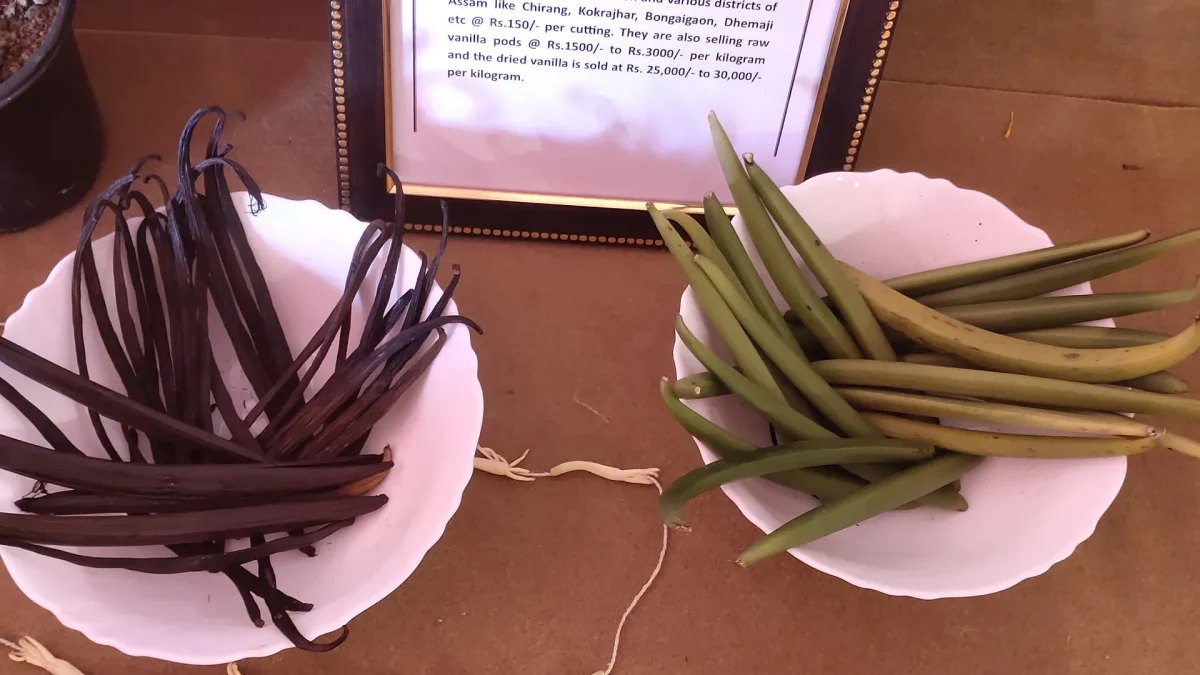
Grade A gourmet beans typically measure 15 to 20 cm or longer, stay oily and flexible, carry high moisture and show minimal splits or blemishes. A correct Grade A pod bends around a finger without cracking and releases aroma immediately when scratched. Colour is uniformly dark brown to black. Anything shorter, drier or visibly damaged belongs in Grade B, regardless of what the packing label says.
What vanillin content should I expect from properly cured Indonesian planifolia?
Well-cured Indonesian planifolia usually tests around 1.5 to 2.5 percent vanillin by weight. The figure moves with terroir, harvest maturity and curing discipline, so it must be treated as a range rather than a guaranteed number. Papua-grown pods are frequently marketed at the upper end of that band. Always require a lot-specific certificate of analysis instead of accepting a generic origin claim.
How do Bali vanilla beans compare with Madagascar Grade A on vanillin percentage?
Indonesian Grade A commonly reaches around 2 percent vanillin, while top Madagascar Bourbon lots can exceed 2.5 to 3 percent. The gap narrows sharply when Indonesian beans are cured slowly using bourbon-style sweating and conditioning. Because both figures vary by lot, the only defensible comparison is between two current certificates of analysis using the same test method, not between origin reputations.
Is there an Indonesian national standard for grading vanilla beans before export?
Indonesia applies SNI, the Standar Nasional Indonesia, alongside established trade norms covering pod length, moisture content and defect tolerances. SNI sets the national baseline, but most export contracts are written against buyer-specific specifications that are tighter than the national minimum. For that reason your purchase contract, not the SNI reference alone, should define the exact grade you are paying for.
What moisture content do European buyers expect in import-quality Indonesian vanilla?
European buyers typically specify moisture around 25 to 35 percent for gourmet whole beans, which keeps pods flexible without inviting mold. Extract-grade lots normally run drier because they are destined for percolation rather than display. The exact band, the measuring method and the tolerance must be written into the contract, since a five-point difference changes both shelf life and delivered weight.
How are Grade B or extract-grade vanilla beans classified for bulk buyers?
Grade B extract-grade beans are shorter, drier and more blemished than Grade A but retain full aromatic value for extraction. Splits, minor surface marks and pods below roughly 14 cm are normal and do not reduce vanillin yield. Because extraction destroys appearance anyway, buying Grade B for extract lines is standard practice and typically saves roughly USD 10 to 30 per kilogram against Grade A.
Which defects push a lot from Grade A down to Grade B?
Excess splits, visible mold, insect damage, pods below roughly 14 cm and moisture outside the contracted 25 to 35 percent band are the defects that downgrade a lot. European importers also reject beans with foreign odour or brittle, cracking texture. Downgrading is normally decided on a percentage-of-lot basis at inspection, so contracts should state the maximum defect percentage tolerated before repricing or rejection applies.
Do buyers in the United States prefer fully cured black beans or partially cured red beans?
United States food buyers overwhelmingly prefer fully cured black beans, and the United States remains one of the largest destinations for Indonesian vanilla shipped under HS 0905. Partially cured red or brown beans are a niche product bought mainly by processors who intend to finish curing themselves. For mainstream US retail, bakery and extraction demand, quote fully cured black pods only and fix the cure state in the specification annex.
How is vanillin content measured before signing a long-term supply contract?
Vanillin content is measured by laboratory analysis, usually HPLC or GC, on a representative composite sample drawn across the whole lot rather than from hand-picked pods. Serious industrial buyers arrange sampling through a third-party inspector and send the sealed sample to their own laboratory. Contract wording should name the method, the sampling protocol and the referee laboratory used if results are disputed.
How do I read a vanillin certificate of analysis from an Indonesian laboratory?
A usable certificate of analysis states vanillin percentage by weight, the test method such as HPLC, the sampling date, the lot code, the sample weight and the issuing laboratory with its accreditation. If any of those fields is missing, the document is not traceable to your consignment. Match the lot code on the certificate against the packing list and container seal before releasing payment.
Curing, harvest season and processing (8)
In which months are vanilla beans harvested and cured in Bali?
Harvest in Bali usually peaks between May and August, with curing running for several months afterwards. That timing means fully conditioned export beans from a given crop generally become available late in the same calendar year and through the following months. Buyers planning a Q1 launch should place orders against the previous harvest rather than assuming fresh beans are ready on demand.
How long does full curing of Indonesian planifolia take?
Complete curing takes 2 to 6 months from scalding to conditioned storage, depending on method, weather and target moisture. The sequence runs killing or scalding, sweating, sun and shade drying, then conditioning in closed boxes where aroma develops. Compressed curing schedules produce beans that look acceptable but test low on vanillin, which is a common reason for later contract disputes.
What scalding temperature and time start the curing process?
Indonesian processors typically scald green pods in hot water at roughly 60 to 70 degrees Celsius for a few minutes to kill the pod and trigger enzymatic reactions. Exact temperature and dwell time vary between processors and pod maturity, so the figure should be confirmed for the specific lot. Under-scalding leaves pods green and grassy; over-scalding strips aroma precursors permanently.
Does bourbon-style curing improve the vanillin content of Papua beans?
Bourbon-style curing, meaning scald, sweat, alternating sun and shade drying, then long conditioning, is used specifically to maximise vanillin development and aromatic complexity. The measurable gain differs by lot and cannot be promised as a fixed percentage. What is consistent is that patiently conditioned beans test higher and smell rounder than fast-dried beans from the same farm and the same harvest week.
Is traditional sun-curing in Alor accepted by European buyers?
European buyers accept sun-cured Indonesian vanilla when the beans are clean, mold-free, correctly conditioned and traceable to a documented lot. Many premium buyers still prefer controlled indoor or hybrid curing because it produces tighter batch-to-batch consistency. If your specification requires controlled curing, state it in the contract, because sun-curing remains the default method across much of Alor and Papua.
How many weeks of sun exposure do beans get before shade drying?
Sun exposure in Bali and Alor is usually limited to a few hours per day across several weeks, after which pods move to shade drying and then to conditioning boxes inside the 2 to 6 month curing cycle. The aim is gradual moisture loss, not speed: pods dried too fast case-harden on the outside while staying wet inside, which causes mold weeks later in a sealed carton. Exact schedules vary by region and weather.
How does the rainy season in Papua affect curing and storage risk?
High humidity and rainfall during the Papua wet season significantly raise mold risk in both curing and storage, because pods cannot shed moisture fast enough to hold the contracted 25 to 35 percent band. Processors compensate with longer ventilation, indoor drying racks and more frequent inspection of conditioning boxes. Buyers shipping wet-season lots should tighten the moisture specification and insist on desiccants and vacuum packing for the sea leg.
Can I export green uncured beans from Indonesia and cure them myself overseas?
Export of green uncured vanilla from Indonesia is generally restricted or discouraged, and effectively all commercial shipments leave the country as fully cured, conditioned beans. Green pods also travel badly: they ferment, mold and lose value within days without controlled handling. Buyers who want a specific curing style should specify it upfront so the processor cures to your profile rather than shipping raw material.
Pricing, costs and margins (10)
What is the current FOB price per kilo for Grade A Indonesian planifolia from Bali?
Grade A Indonesian planifolia from Bali is indicatively quoted from around USD 30 to USD 80 per kilogram FOB across 2025 and 2026, with the spread driven by vanillin content, pod length and defect rate. This band is indicative only and moves with each harvest and with global market conditions. Request a live written quotation for your grade and volume before you build a costing model.
How much cheaper is Grade B extract-grade vanilla than Grade A gourmet?
Grade B extract-grade beans are indicatively quoted from around USD 20 to USD 50 per kilogram, roughly USD 10 to USD 30 below Grade A from the same harvest. Because extraction ignores appearance, that discount is usually pure saving for extract producers. Confirm the current spread on request, since the gap widens in strong harvest years and narrows when gourmet supply is tight.
What is the average export value per kilogram of Indonesian vanilla?
Blended average export values for Indonesian vanilla are published by official trade databases such as UN Comtrade and WITS under HS 0905, and they mix gourmet, extract and industrial grades from every producing region. That makes any single average a market reference point rather than a quotable price. Grade-specific indicative bands are more useful: from around USD 30 to 80 per kilogram FOB for Grade A and USD 20 to 50 for Grade B, confirmed on request.
How much should I budget for samples if I want 5 kg from Bali?
Sample lots from 5 kg are available on request, priced per kilogram at the prevailing grade rate plus international courier charges and any destination duty. Courier cost depends on your country, service level and declared value, so it is quoted per shipment rather than published. Ask for a written sample quotation that separates bean cost, courier cost and documentation before you approve dispatch.
What gross margin is realistic reselling Indonesian vanilla in the European Union?
Resellers commonly target markups in the 30 to 100 percent range over fully landed cost, depending on whether they sell bulk B2B, private-label retail or direct to consumers. Bulk trading sits at the low end; branded retail in glass tubes sits at the high end but carries packaging, marketing and slow-moving stock costs. Model your own landed cost first, then set the margin.
Is Indonesian vanilla still profitable compared with buying Madagascar beans?
Indonesian vanilla generally lands at a lower price per kilogram than comparable Madagascar Bourbon, which is the core commercial argument for the origin. Whether that translates into profit depends on your positioning: buyers selling on Bourbon flavour expectations may struggle, while buyers selling an earthier, spicier Indonesian profile or supplying extraction lines capture the price advantage directly. Margins vary and must be modelled per channel.
What hidden fees should I expect when importing 200 kg of vanilla into Rotterdam?
Beyond the FOB price, budget for ocean or air freight, marine insurance, terminal handling, customs brokerage, import duty and VAT, laboratory testing, delivery-order fees, inland trucking and possible demurrage or warehouse storage. On a 200 kg consignment these fixed costs weigh heavily per kilogram. Ask your broker for a full landed-cost simulation under HS 0905 before you commit to a purchase price.
Are Indonesian vanilla prices expected to rise or fall between 2026 and 2028?
Vanilla is one of the most volatile agricultural commodities, and published market reviews for 2026 describe continued volatility rather than a settled direction. No supplier can responsibly promise a price trajectory two years out, because weather, cyclones in competing origins and speculative stockholding all move the market. Manage the risk with staged contracts, review clauses or index-linked pricing instead of forecasts.
Can I lock a fixed price per kilo on a 12-month contract for Papua beans?
Fixed-price and index-linked 12-month contracts can be considered, subject to committed annual volume, an agreed call-off schedule and a deposit structure that shares market risk. Fixed pricing protects you when the market rises and costs you when it falls, so many buyers prefer a collar with a floor and ceiling. Terms are quoted on request against your specific volume commitment.
Do suppliers give volume discounts for a 1 tonne annual commitment?
Tiered pricing is standard practice: an annual commitment at tonne level attracts a better per-kilogram rate than repeated 200 kg spot purchases, because curing, sorting and documentation costs are spread across more weight. Discounts are normally structured as a contracted price per grade with call-offs through the year. Indicative tier pricing for your volume is available on request.
MOQ, contracts and payment terms (9)
What is the typical minimum order quantity for new B2B buyers?
The standard minimum order is 25 kg per shipment per grade, with 5 kg trial lots accepted from first-time buyers who need to evaluate quality before committing. Mixed shipments can reach the 25 kg minimum across two grades. Private-label and container programmes carry higher minimums. Confirm the current MOQ for your grade and destination before planning your first purchase order.
Can I buy only 5 kg of Indonesian vanilla as a first order?
A 5 kg first order is accepted as a sample or trial lot so buyers can run their own laboratory tests and production trials. Regular supply contracts normally begin at 25 kg per shipment. Because courier and documentation costs are largely fixed, the per-kilogram landed cost of a 5 kg parcel is significantly higher than a 25 kg shipment. Budget accordingly.
What MOQ applies to private-label packaging for European retail?
Private-label programmes generally require larger commitments, commonly from 100 kg or a defined minimum number of retail units per SKU, because printing, labelling and packaging tooling carry setup costs. Glass tubes, pouches and gift boxes each have their own minimum run. Ask for the specific unit minimum tied to your chosen packaging format before you commission artwork or brief a retail buyer.
Can I mix Grade A and Grade B in one shipment under one contract?
Grades and origins can be combined in a single shipment provided each lot is separately specified, separately packed and individually listed on the invoice and packing list under HS 0905 with its own lot code. Customs and your own quality team both need that separation. Mixing grades inside one carton without lot identification is a classic source of disputes and should never be accepted.
Is advance payment mandatory for first-time buyers?
First-time buyers are normally asked for an advance of roughly 30 to 50 percent with the balance due against shipping documents or after third-party inspection. That structure protects both sides: the exporter covers procurement and curing costs, while the buyer retains leverage until the goods are verified. Letters of credit are an accepted alternative for larger consignments. Terms are confirmed per contract.
Can I pay in euros instead of US dollars to reduce currency risk?
US dollars are the standard settlement currency for Indonesian vanilla exports, and most quotations, freight rates and trade data are denominated in USD. Euro settlement can be discussed case by case, usually with the rate fixed on the contract date. If neither side wants the exposure, hedging through your own bank is generally cheaper than pricing the currency risk into the bean price.
Are 30 to 60 day credit terms available on vanilla exports?
Open credit terms of 30 to 60 days are normally reserved for established buyers with a repeat order history and verified financial standing. New buyers pay in advance, against documents, or through a letter of credit. Consignment stock is rare in vanilla because the product loses moisture and aroma over time, which makes unsold inventory a genuine quality liability rather than just a cash cost.
What documents will I sign before an order is confirmed?
A typical order file contains a proforma invoice, a sales contract with a full specification annex, your purchase order and, where relevant, a non-disclosure agreement or a separate quality agreement. The specification annex is the document that matters most: it should carry grade, the moisture band such as 25 to 35 percent, vanillin percentage, defect tolerance, packing, test method and rejection criteria. Everything else references it.
Do buyers need a long-term supply agreement, or can I buy spot?
Both spot purchases and long-term supply agreements are normal in the vanilla trade. Spot buying suits small roasters, bakeries and traders testing the origin; annual agreements suit extraction plants and private-label brands that cannot afford a supply gap mid-season. Given that Bali harvest peaks between May and August, annual buyers usually contract before the crop is cured and allocated.
HS 0905, phytosanitary and regulatory documents (11)
Which HS code applies to cured vanilla beans exported from Indonesia?
Cured vanilla beans are classified under HS heading 0905, with subheading 09051000 commonly used for vanilla. The same heading applies whether beans are sun-cured or oven-finished, and whether they are Grade A or extract grade. Declaring the botanical name Vanilla planifolia alongside the code on the invoice and packing list reduces the risk of a classification query at destination customs.
Is a phytosanitary certificate required for every shipment?
A phytosanitary certificate is required by most destination countries, including the United States and European Union member states, for every commercial vanilla consignment because vanilla is a plant product. The certificate is issued after inspection and travels with the shipping documents. Missing or mismatched phytosanitary paperwork is one of the most common causes of a consignment being held at the border.
Which Indonesian authority issues phytosanitary certificates for vanilla?
Phytosanitary certificates for Indonesian vanilla are issued by the national agricultural quarantine authority at the port or airport of departure, after physical inspection of the consignment. Procedures, inspection lead times and supporting documents differ between Denpasar, Surabaya and Jakarta. Build at least a few working days into your shipping schedule for inspection and certificate issuance, and confirm current requirements per port.
Do I need a certificate of origin for HS 0905 vanilla to claim lower duties?
A certificate of origin is commonly required to claim preferential tariff rates under trade agreements between Indonesia and your destination market. Without it, the shipment clears at the standard most-favoured-nation duty rate, which can materially change landed cost. Request the certificate at order confirmation rather than after shipment, because retroactive issuance is possible in some regimes but not all.
What FDA requirements apply when importing Indonesian vanilla into the USA?
The United States FDA requires prior notice of imported food shipments before arrival, filed by the importer or customs broker, along with facility registration for the foreign supplier where applicable. Vanilla also falls under general food safety expectations for adulteration and labelling. Your customs broker should file prior notice against the same lot numbers shown on the phytosanitary certificate and packing list.
What food safety tests do European buyers request for vanilla beans?
European buyers commonly require microbiological counts, pesticide residue screening and heavy metals testing against EU maximum limits, sometimes with mycotoxin analysis added. Testing is normally done pre-shipment on a sealed sample so that a failure is discovered in Indonesia rather than at Rotterdam or Hamburg. Specify which tests, which limits and which laboratory in the contract to avoid arguments after arrival.
Do I need organic certification recognised in the EU to sell the vanilla as organic?
To market vanilla as organic anywhere in the European Union, the lot must carry organic certification recognised under EU organic rules and issued by an approved control body, with an unbroken certified chain from farm to importer. Local organic farming practice without that documentation cannot legally be labelled organic in France, Germany or the Netherlands. Plan certification well before your first organic-labelled shipment.
Is halal certification available for Indonesian vanilla exports?
Halal certification is requested by some Gulf and Southeast Asian buyers, including importers in the United Arab Emirates, Saudi Arabia and Malaysia, particularly where processing, extraction, alcohol carriers or additives are involved. Whole cured beans are a single-ingredient agricultural product, so the certification burden is lighter than for extracts and compounds. Confirm whether your destination market or retail customer requires certification before production, since retrofitting documentation to a finished lot is difficult.
Does Australia require fumigation proof for vanilla under HS 0905?
Australian biosecurity frequently requires treatment or inspection documentation for imported plant products, and the applicable conditions vary by commodity, season and pest risk assessment. Because requirements change, verify the current import conditions with the Australian biosecurity authority or your licensed broker before shipping. Fumigation can also affect aroma, so agree the treatment method with your supplier before it is applied.
Can vanilla under HS 0905 ship together with cocoa under HS 1801?
Vanilla under HS 0905 and cocoa under HS 1801 can travel in one container provided each product is separately declared on the commercial invoice, packing list and customs entry. The practical caution is aromatic: vanilla readily absorbs and transfers odour, so cocoa, spices or coffee should be physically segregated and vanilla should stay vacuum-sealed inside lined cartons for the entire voyage.
Is there an Indonesian export tax specifically on vanilla beans?
No vanilla-specific export tax is widely published under HS 0905, although general export administration, quarantine inspection and documentation fees apply to every consignment. Because fiscal rules can change between budget years, confirm the current position with your exporter and, for material volumes, with a licensed customs consultant before you finalise pricing on a long-term contract. Regulatory disclaimer: the customs, quarantine, food safety, certification and tax information on this page is general commercial guidance based on public sources and export practice as reviewed for 2027. It is not legal, tax or customs advice. Import conditions differ by country, product form and shipment, and they change. Verify every requirement with the official authority in your destination market and with a licensed customs broker, lawyer or tax adviser before you contract or ship.
Logistics, packing and shipping (9)
Is air freight or LCL sea freight better for vanilla shipped to Europe?
Air freight protects quality best because transit is measured in days rather than weeks, which limits humidity exposure and mold risk, but it costs several times more per kilogram. LCL sea freight is far cheaper and is the norm for contracts above a few hundred kilograms, though it leaves beans at sea for 30 to 40 days to Rotterdam or Hamburg. Most buyers air-freight samples and first trial orders, then move to sea freight for repeat volume.
What is the sea transit time from Jakarta or Surabaya to Rotterdam?
Sea transit from Jakarta or Surabaya to Rotterdam typically runs 30 to 40 days port to port, before customs clearance and inland delivery. Transhipment via Singapore or a Middle East hub can add time, and peak-season congestion adds more. Build the full window into your production planning and remember that beans continue to lose moisture slowly throughout the voyage.
How is Indonesian vanilla packed for export?
Export beans from Bali, Alor and Papua are graded, bundled, then vacuum-sealed or wrapped in food-grade foil bags, frequently with oxygen absorbers, and packed inside lined export cartons. Vacuum and foil packing protects aroma, blocks humidity and limits mold during long sea voyages. Jute sacks are unsuitable for cured vanilla. Each carton should carry the lot code, grade, net weight and harvest reference on the outer label.
Can beans from Alor and Papua be loaded into one FCL container from Surabaya?
Beans from Bali, Alor and Papua can be consolidated inland and loaded into a single FCL container at a major port such as Surabaya or Jakarta. Each origin keeps its own lot codes, certificates and packing-list lines so traceability survives consolidation. This approach is common for buyers who want origin diversity in one shipment without paying for three separate freight movements.
Do cartons need to be palletised for shipment to the United States?
Most United States buyers prefer palletised cartons on heat-treated ISPM-15 compliant pallets, because palletisation speeds warehouse handling and reduces carton damage. Loose loading maximises container fill and is still used for cost-sensitive bulk shipments. Decide before packing, since converting to pallets at origin after cartons are sealed adds cost and delay at the port.
Which INCOTERMS are most common for Indonesian vanilla exports?
FOB and CIF are the two most commonly used INCOTERMS for Indonesian vanilla, with FOB favoured by buyers who control their own freight forwarders and CIF favoured by buyers who want one delivered price to the destination port. CIF always prices higher than FOB for identical beans because it includes ocean freight and marine insurance. State the named port in every quotation.
How many kilos of vanilla fit in a 20-foot container?
A 20-foot container holds several tonnes of packed vanilla, but the binding constraint is volume rather than weight, because pods are packed loosely in cartons to avoid compression damage. Exact payload depends on carton dimensions, whether the load is palletised and how the beans are bundled. Ask for a cubic loading plan before booking, rather than assuming a standard tonnage.
Is it risky to ship vanilla from Papua during the wet season?
Wet-season shipping from Papua raises humidity-related mold risk inside the container, especially across 30 to 40 day voyages that cross temperature zones and generate container rain. Mitigation is straightforward: ship at the lower end of the moisture specification, vacuum-seal, add desiccants, use container liners and avoid loading cartons directly against steel walls. Insist that the shipment is inspected and sealed in dry conditions.
Can I consolidate several small suppliers through a Jakarta forwarder?
Freight forwarders in Jakarta and Surabaya offer consolidation services that combine goods from multiple small suppliers into one shipment under a single bill of lading. That reduces freight cost per kilogram but concentrates risk: one supplier's late or non-compliant lot delays everyone. Insist that each supplier's lot is inspected and documented separately before consolidation begins.
Supplier due diligence and risk control (10)
How do I verify that an Indonesian vanilla exporter is legitimate?
Verify Indonesian company registration documents, export track record under HS 0905, buyer references, independent laboratory reports and a verifiable physical address, then confirm at least one of those independently rather than relying on documents the supplier emails you. A video call from the curing facility, a third-party inspection and a small trial order together give a far stronger signal than any brochure or website claim.
What scams should foreign buyers watch for when sourcing from Papua and Alor?
The recurring risks are fabricated laboratory reports, grade substitution between sample and shipment, short weights, moisture padding that pushes lots above the contracted 25 to 35 percent band, and disappearance after a 30 to 50 percent deposit is paid. Every one of these is neutralised by the same three controls: third-party pre-shipment inspection, sealed sampling sent to your own laboratory, and payment released against verified shipping documents rather than promises.
How can I confirm my supplier actually shipped the consignment invoiced to me?
Confirm shipment through the bill of lading number, the container number and carrier tracking, cross-checked independently with your own freight forwarder at the load port in Surabaya or Jakarta rather than through the supplier. The container seal number should appear on the inspection report, packing list and bill of lading identically. Any mismatch between those three documents is a stop signal before you release the balance payment.
Is a 50 percent deposit safe with a new supplier, or should I use a letter of credit?
For a first transaction with an unfamiliar supplier, a letter of credit or escrow arrangement is materially safer than a large unsecured deposit, because payment is released against documents that prove shipment and compliance. Deposits of 30 to 50 percent are normal in this trade, so the practical compromise is a small deposit plus a documentary balance, backed by pre-shipment inspection.
How do I confirm my beans are really from Papua and not repacked cheaper stock?
Papua origin is evidenced through farm-level purchase records, collector documentation, dated photographs tied to lot codes and QR-linked traceability from farm to carton. Where origin premium is commercially critical, isotope or DNA testing can be commissioned, though it is expensive and rarely used below container scale. The cheapest real control is a documented, auditable chain of custody written into the contract.
Can vanillin laboratory reports be manipulated to overstate quality?
Selective sampling, reused certificates and results taken from a different lot are known risks across the vanilla trade, which is why experienced buyers never accept a supplier-supplied certificate alone. The control is simple: have samples drawn at random by a third-party inspector, sealed in the inspector's presence, and sent directly to a laboratory you appoint and pay, with the HPLC or GC test method named in the contract.
What red flags suggest a vanilla deal may be fraudulent?
Warning signs include pressure to pay immediately, inconsistent paperwork between invoice, packing list and certificates, refusal of third-party inspection, no verifiable physical address, references that cannot be contacted, and prices far below the prevailing market band of roughly USD 20 to 80 per kilogram. Any single flag warrants questions; two together warrant walking away from the transaction.
How do I run due diligence on a company's export history under HS 0905?
Export history can be checked through commercial trade-data platforms that record HS 0905 shipments, chamber of commerce records, industry associations and, where available, customs statistics for the destination market. Cross-reference the company name, address and volumes against what the supplier has claimed. A genuine exporter of scale leaves a documentary trail across several of those sources.
Should I insist on third-party inspection before the shipment leaves port?
Third-party pre-shipment inspection by SGS or an equivalent agency is common practice and strongly recommended for first shipments and full container loads. The inspector verifies quantity, packing integrity, moisture, visual grade and seal numbers, and draws sealed samples for laboratory testing. Inspection cost is a small fraction of consignment value and is the single most effective control against grade substitution.
How should disputes over moisture or vanillin be handled?
Dispute risk collapses when the contract names the test method, the tolerance band such as vanillin 1.5 to 2.5 percent, the sampling protocol, the referee laboratory and the specific remedy for each type of failure. Typical remedies are a price adjustment for a marginal shortfall, replacement for a material shortfall and rejection with refund for a failed food safety test. Agree this before shipment, never afterwards.
Origin comparison and product choice (7)
How does Indonesian planifolia compare with Madagascar Bourbon on flavour?
Indonesian planifolia is typically described as earthier, woodier and spicier, while Madagascar Bourbon leads with sweet, creamy, custard-like notes. Neither profile is objectively better; they suit different applications. Indonesian beans perform strongly in chocolate, spiced bakery, savoury applications and extraction blends, while Bourbon dominates classic vanilla ice cream expectations. Many blenders use both to build a rounder finished extract.
Are Papua beans genuinely premium compared with Bali and Alor?
Papua beans are frequently marketed as premium and higher in vanillin because of terroir and growing conditions, and they often justify that positioning. Curing discipline, however, influences the final vanillin figure at least as much as origin does. A carefully cured Bali or Alor lot can outperform a rushed Papua lot, so buy on the certificate of analysis rather than on the island name.
Should I source Tahitensis or planifolia from Indonesia?
Planifolia is the correct choice for mainstream extraction, bakery, ice cream and retail, and it is the backbone of Indonesian vanilla exports. Tahitensis serves a premium niche with floral, anisic and cherry-like aromatics, commands a higher price and appeals to pastry chefs and perfumery buyers. Many buyers run planifolia as the volume line and Tahitensis as a small signature SKU.
Is there a Grade C or industrial category for Indonesian vanilla?
Many exporters use an informal industrial or Grade C category covering very dry, broken or heavily blemished pods, cuts and splits, sold at a discount to the indicative USD 20 to 50 per kilogram Grade B band for bulk extraction and flavour compounds. No universal published standard defines it, so the specification must be written explicitly into your contract with moisture, defect and vanillin parameters rather than relying on the label alone.
Should I buy Grade B beans for extraction or use synthetic vanillin?
Grade B beans deliver the full natural aromatic complexity of the pod and allow a natural vanilla extract claim, while synthetic vanillin is dramatically cheaper but single-note and cannot carry that claim under most food labelling regimes. At an indicative USD 20 to 50 per kilogram, Grade B is the economical route for brands whose customers expect real vanilla on the ingredient list.
How long do cured Indonesian vanilla beans last in storage?
Properly cured and packed vanilla beans hold usable aroma for roughly 2 to 3 years when stored cool, dark and sealed away from air movement, which is comparable to Madagascar beans under identical conditions. Vacuum or foil packing with an oxygen absorber matters more than origin. Beans stored loose in a warm kitchen environment dry out and fade within months.
Is Indonesian vanilla suitable for premium ice cream brands in Europe?
Grade A Indonesian planifolia is fully suitable for premium ice cream, patisserie and bakery applications, with high seed count and enough moisture to scrape cleanly. Indonesia is the largest vanilla exporter in Asia and supplies flavour houses as well as artisan producers. Brands built specifically on a Bourbon flavour promise should trial Indonesian beans in the actual recipe before switching origin.
Private label, branding and product development (7)
Can Indonesian exporters provide full private-label solutions?
Private-label programmes can cover retail packaging, label application, barcodes, carton design and export documentation under your own brand, so the product arrives shelf-ready. The practical requirements are a defined SKU specification, approved artwork, a committed minimum run commonly from 100 kg and clarity on which party owns the regulatory compliance. Scope and pricing for a private-label programme are quoted on request against your packaging format.
What is the lead time to develop a private-label vanilla brand for EU retail?
Private-label development commonly takes 3 to 6 months from first sample to shelf-ready stock, covering bean selection, laboratory testing, artwork approval, packaging production, the export cycle and retailer listing procedures. Sea freight alone consumes 30 to 40 days of that window. Buyers targeting a specific retail season should start at least two quarters ahead of the intended launch date.
Can my logo be printed on vanilla glass tubes in Indonesia?
Branded labels and printed sleeves can be applied to glass tubes, pouches and boxes in Indonesia before export, which avoids paying to relabel in your own market. The constraint is minimum run size per packaging format rather than technical capability. Buyers who need destination-specific regulatory text sometimes print a base label at origin and apply a local-language overlay on arrival.
Will Indonesian suppliers help with EU-compliant labels and ingredient text?
Experienced exporters can advise on the standard elements European Union food labels require, including the botanical name Vanilla planifolia, country of origin, lot code, net weight and storage instructions. Final legal responsibility for label compliance sits with the importer or the brand owner named on the pack, not with the exporter. Have your label text reviewed by a food-law specialist in the destination market before printing.
Can I source whole beans and vanilla powder under one private-label programme?
Whole beans, ground vanilla powder and paste or extract formats can be produced under a single private-label programme, which lets a brand launch a three-SKU range from one supplier and one shipment. Powder and extract carry additional processing, testing and sometimes halal or organic documentation requirements. Confirm the specification and compliance package for each format separately before committing to artwork.
Is Indonesian private-label vanilla acceptable on marketplaces such as Amazon EU?
Private-label vanilla is accepted on Amazon EU and comparable marketplaces when packaging, labelling, barcoding and food safety documentation meet both EU rules and platform policy. Marketplaces commonly request ingredient and allergen text, a compliant responsible-person address and product images matching the physical pack. Prepare that document set during production rather than after your first listing is suspended.
Will my private-label design be sold to other buyers?
Exclusivity is a contractual matter rather than a courtesy: a written clause naming the artwork, the SKU specification, the packaging format and the territory is what protects a private-label brand. Reputable suppliers honour exclusivity agreements, but nothing prevents resale of an unprotected generic design. Register your trademark in your own market, which for the European Union means an EU trade mark filing, and reference it in the supply contract.
Operations, eligibility and practical sourcing (8)
Do I need an import licence in the EU to bring in vanilla under HS 0905?
Most European Union businesses need an EORI number and standard customs registration rather than a vanilla-specific import licence, since HS 0905 is not a restricted category in normal circumstances. Food business registration in your member state may still apply depending on what you do with the beans. Requirements vary by country, so confirm with your national customs authority before your first import.
Can a small café in Germany import 50 kg of vanilla directly?
A registered business can legally import 50 kg directly provided it handles customs entry, phytosanitary documentation, prior notifications and food business obligations, usually through a customs broker. In practice most small cafés and bakeries buy through a specialised importer or distributor because the fixed compliance and freight costs on 50 kg outweigh the price saving against buying locally.
What visa do I need to visit vanilla farms in Bali and Papua?
Foreign buyers normally travel to Indonesia on a business or tourist visa depending on the activities planned, and some regions in Papua require additional travel permits or local coordination. Visa categories, permitted activities and durations change, so verify current rules with an Indonesian embassy, consulate or official immigration channel and arrange local company support before booking any sourcing trip.
Can I contract directly with farmers in Papua, or must I use a licensed exporter?
Farm-gate purchase agreements with growers or cooperatives are possible, but the actual export must be executed by a licensed Indonesian exporter with the required registrations and quarantine access. In practice most buyers contract commercial terms with the exporter and use farm-level agreements to secure volume, price and traceability upstream. Both layers should reference the same lot codes and specifications.
How do I write quality specifications into a purchase contract?
Write grade, pod length range such as 15 to 20 cm for Grade A, moisture around 25 to 35 percent, vanillin percentage, defect tolerance, packing format, labelling, test method, sampling protocol, inspection point and rejection criteria into a specification annex attached to the contract. Every one of those items is a potential dispute if left unstated. The annex should also name the remedy for each failure type so outcomes are mechanical rather than negotiated.
Should I work with one large exporter or several small cooperatives?
A hybrid structure works best for supply security: one primary exporter for contract discipline, consistent grading and reliable documentation, plus a qualified secondary source that keeps production running if the primary lot fails inspection. Given that harvest peaks between May and August and curing takes months, a single-source strategy leaves no recovery time when a lot is rejected.
What language are contracts with Indonesian exporters written in?
International vanilla contracts are normally drafted in English, frequently with a Bahasa Indonesia version alongside, and Indonesian law can require an Indonesian-language version for certain agreements involving Indonesian parties. Where both versions exist, the contract must state which language prevails in a dispute. Have any dual-language contract reviewed by a qualified lawyer before signing.
Can disputes be arbitrated in Singapore rather than Indonesia?
Neutral arbitration seats such as Singapore are frequently accepted in Indonesian export contracts and are common in commodity trade generally. The clause must name the seat, the arbitral rules, the language of proceedings and the governing law, and enforceability depends on the countries involved. Have the dispute-resolution clause drafted or reviewed by a lawyer experienced in cross-border trade. Legal, immigration and investment disclaimer: the contract, visa, permit, arbitration and business-structure information above is general commercial information reviewed for 2027, not legal, immigration, tax or investment advice, and no outcome is promised. Vanilla trading carries genuine price, quality and counterparty risk. Verify immigration rules through official Indonesian government channels and have contracts, licences and cross-border structures reviewed by a licensed lawyer, customs broker or qualified adviser in the relevant jurisdictions before you commit funds.
Quality problems and what can go wrong (10)
What are the most common quality problems importers face with Indonesian vanilla?
The most frequent complaints are mold growth, inconsistent vanillin between lots, over-dry brittle pods, pesticide residues above EU limits, and foreign odour absorbed during drying or transport. Nearly all of them trace back to two root causes: curing that was rushed and packing that failed to control moisture. Both are visible in a pre-shipment inspection if you commission one.
How likely is mold during a long sea shipment to a cold climate?
Mold risk is significant whenever beans exceed the agreed moisture band or travel without vacuum sealing and desiccants, and it rises further on 30 to 40 day voyages that cross temperature zones and generate condensation inside the container. Control it by shipping at the lower end of the moisture specification, using lined cartons and keeping cartons clear of the container walls.
Can vanilla beans arrive smoky or carrying foreign odours?
Pods dried near open fires in Alor or Papua, or stored beside fuel, spices or cocoa under HS 1801, can absorb smoke and phenolic off-notes that no downstream process removes. Vanilla is highly absorbent, which is precisely why it is packed vacuum-sealed and shipped segregated. Write an explicit odour and taint clause into the specification annex, and smell the retained sample from every lot on arrival.
What happens if my shipment exceeds EU pesticide residue limits?
A consignment that breaches EU maximum residue limits can be refused entry, destroyed, re-exported or re-routed at the importer's cost, and it may trigger a rapid alert notification that increases inspection frequency on your future shipments. The only reliable defence is pre-shipment residue testing on a sealed sample, plus documented knowledge of the farming practices behind the lot.
Is adulteration of vanilla beans a real risk?
Adulteration attempts including added oil, glycerin, water weight and external flavouring are documented across the global vanilla trade, driven by per-kilogram values that run from an indicative USD 20 to 80. Symptoms are pods that feel greasy, weigh heavy for their size or smell intensely at the surface but flatly at the core. Laboratory analysis on an independently drawn sample is the practical defence.
How do moisture and aroma change over 12 months of storage?
Across a year of storage moisture slowly drops and volatile aroma compounds fade, even in good conditions, so a lot tested at 30 percent moisture on shipment may sit measurably lower a year later. Vacuum or foil packing with oxygen absorbers, stored cool and dark, slows both effects. Plan purchase volumes against actual consumption rather than buying a year ahead for price reasons.
Can vacuum sealing damage vanilla beans?
Vacuum sealing preserves aroma and blocks the humidity that causes mold, which is why it is standard for export cartons. The one caveat is mechanical: excessive compression can flatten pods and mark Grade A gourmet beans carrying 25 to 35 percent moisture and destined for retail display. Gentle vacuum, bundled pods and rigid lined cartons solve it without giving up the protection.
Is aflatoxin or mycotoxin contamination a genuine risk in vanilla?
Mycotoxins including aflatoxin can develop wherever drying and storage are poor and mold has been allowed to establish, which is why some European and Japanese buyers include mycotoxin screening in their acceptance testing. The risk is manageable rather than inherent: correctly cured beans held at the specified moisture in sealed packaging rarely present an issue. Add the test if your customer requires it.
What can I do if a supplier repeatedly ships below the agreed vanillin content?
When independent HPLC results confirm vanillin below the contracted minimum, typically set inside the 1.5 to 2.5 percent band, the available remedies are a price adjustment, replacement of the lot, rejection with refund, or enforcement of a contractual penalty, depending on what the specification annex says. Repeated shortfalls are a supplier selection problem rather than a negotiation problem. Requalify the source or move the volume to your secondary supplier.
Do European customs ever hold or seize vanilla shipments?
Border holds and rejections do occur at European Union ports such as Rotterdam and Hamburg when phytosanitary paperwork, labelling, origin documentation or residue limits fail to meet requirements, and a failed consignment can trigger increased scrutiny on subsequent shipments. Frequency varies by importer history and destination. Complete, consistent documentation across invoice, packing list, certificate of origin and phytosanitary certificate is the cheapest insurance available in this trade.
No matching questions. Ask us directly on WhatsApp.
Talk to our export desk
Send your grade, volume and destination and we’ll answer the rest.