
Vanilla bean grading in Indonesia is generally based on length, moisture content, and visual appearance, but the exact thresholds applied to each factor vary by buyer — there is no single universal grading scale used industry-wide, which is why importers evaluating a shipment on arrival need their own checklist rather than relying solely on the exporter’s stated grade name. This 2027 checklist walks through what to physically check when a shipment lands.
What Should Buyers Physically Check on Arrival?
Before accepting a shipment against contract terms, importers typically inspect a representative sample for the following characteristics, comparing results against the specification agreed in writing at the time of order.
1. Length and Uniformity
Gourmet-grade beans are generally expected to be longer and more visually uniform, since length and appearance matter directly for whole-bean retail and HORECA use. Beans intended for extraction are less dependent on visual length, since the extraction process does not require aesthetic uniformity — but buyers should still confirm the length range matches what was agreed, since mismatched length can affect packaging count and per-unit yield calculations downstream.
2. Moisture Content
Moisture content affects both shelf life and weight-based pricing calculations, and it is one of the most commonly disputed specification points between buyers and suppliers. Importers with access to a moisture meter can spot-check on arrival; buyers without in-house testing capability should request a Certificate of Analysis or third-party lab report as part of the shipment documentation instead of relying on visual assessment alone.
3. Splits and Physical Defects
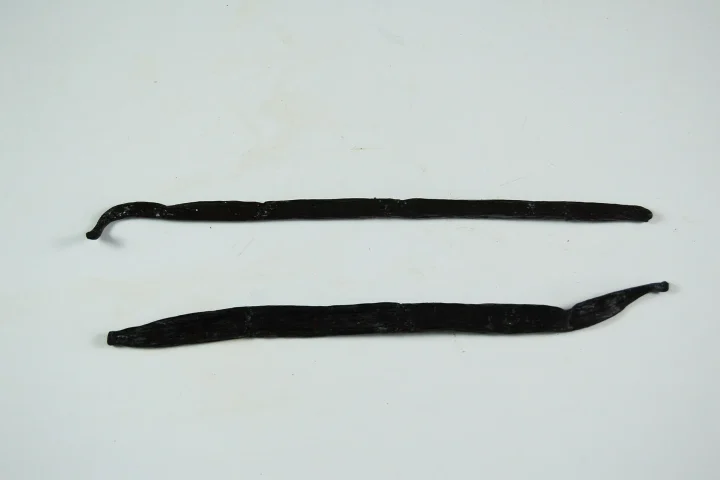
Split beans (where the pod has cracked or split along its length) are generally considered a lower grade for whole-bean applications, though they can still be acceptable — sometimes even preferred — for extraction use, where the split does not affect flavor yield. Buyers should clarify with their supplier whether their contract specification tolerates a certain percentage of splits, and what percentage was agreed before shipment.
4. Mold, Discoloration, and Off-Odor
Any visible mold, unusual discoloration, or off-odor on arrival is a red flag that should trigger immediate documentation (photos, notes) and communication with the supplier, since this can indicate moisture problems during curing or packaging failure during transit. This is also where proper shipment packaging, as discussed on our storage and shipment page, plays a preventive role.
| Check | What to Look For | Why It Matters |
|---|---|---|
| Length & uniformity | Consistency with agreed spec range | Affects grade classification and retail suitability |
| Moisture content | Within agreed range; request lab data if unsure | Affects shelf life and weight-based value |
| Splits / defects | Percentage within agreed tolerance | Determines suitability for whole-bean vs extraction use |
| Mold / off-odor | None visible or detectable | Indicates curing or packaging failure — reject or flag immediately |
How Should Disputes Over Grading Be Handled?
Because grading standards are not universally fixed, the best protection for both buyer and supplier is a written specification agreed before shipment, ideally supported by an approved reference sample both parties retain. When a shipment arrives outside agreed tolerances, documenting the discrepancy clearly (photos, moisture readings, sample retention) and raising it promptly with the supplier gives both sides a factual basis to resolve the issue, rather than a dispute based on differing assumptions about what “Grade A” was supposed to mean.
Requesting Documentation Before You Order
Buyers who want more assurance before committing to volume can request a pre-shipment sample matched to their exact specification, along with grading and moisture documentation. Our vanilla bean defect inspection guide for 2027 goes into more visual detail on identifying common defects, and our guide to evaluating vanilla bean samples in 2027 walks through how to structure your own internal sample review process before signing a contract.
Building Grading Confidence Into Every Order
Consistent grading comes down to clear written specification, an agreed reference sample, and documentation that both sides can point back to if a question arises after shipment. We work with buyers to define grading terms in writing for each order rather than relying on a generic grade name that may mean something different to each party.
How Should Buyers Handle a Shipment That Fails Inspection?
When a shipment arrives outside agreed specification, the first step is thorough documentation — photographs, moisture readings, and a retained sample — before any decision is made about acceptance, partial acceptance, or rejection. Communicating findings to the supplier promptly, with this documentation attached, gives both parties a factual basis to resolve the issue, whether that means a price adjustment, replacement shipment, or another negotiated outcome. Waiting too long to raise a discrepancy can complicate resolution, particularly if the cargo has already been distributed into a buyer’s own production process.
Should Buyers Use Third-Party Inspection Services?
For larger or higher-value shipments, some buyers engage independent third-party inspection services to verify grading and quality before or immediately after shipment, adding a layer of verification beyond the exporter’s own QC process. This is a reasonable practice for buyers without in-house testing capability or for first-time orders where trust with a new supplier has not yet been established through a track record of prior transactions.
What Does a Well-Documented Grading Process Look Like From Our Side?
Our desk documents grading results for each export batch — recording length distribution, moisture readings, and defect rate against the buyer’s agreed specification — before packing for shipment. This documentation is available to buyers as part of the pre-shipment or shipment package, and we encourage buyers to request it explicitly if it is not automatically included in your agreed terms, so there is no ambiguity about what grading standard was actually applied to your specific order.
To review our broader quality documentation approach, see our quality assurance page, and for buyers evaluating multiple product lines at once, our full product and service overview covers the range of grades and formats we can supply.
How Does Grading for Whole Bean Retail Differ from Grading for Bulk Extraction Supply?
Whole bean retail and HORECA buyers generally place heavy weight on visual appearance and length uniformity, since the bean itself is the product the end consumer or chef will handle directly. Bulk extraction buyers, by contrast, prioritize moisture content and aromatic yield potential over visual uniformity, since the bean’s physical appearance has no bearing on the final extract once it is processed. Understanding which category your business falls into helps focus your grading checklist on the factors that actually matter for your application, rather than applying retail-oriented criteria to a bulk extraction order or vice versa.
What Long-Term Relationship Practices Reduce Grading Disputes Over Time?
Buyers and suppliers who maintain a shared reference sample, document agreed tolerances in writing at the start of each contract period, and communicate proactively about any changes in expected grade mix tend to experience far fewer disputes over time than relationships that rely on verbal understanding or assumptions carried over from a previous, informal transaction. Treating grading specification as a living document that gets revisited periodically — rather than a one-time agreement — helps both sides adapt as buyer needs or supply conditions evolve.
Ready to Request a Written Quote?
Specifications, sampling terms, and pricing for your shipment are confirmed in writing by our desk once we understand your grade, volume, and destination port. Message our export desk on WhatsApp at +62 811-3941-4563 or email [email protected] to start a written enquiry.