Knowing how to evaluate vanilla bean samples is the single most reliable way to protect your business before committing to a wholesale order. This 2027 protocol walks you through the exact seven steps professional buyers use — visual inspection, aroma, flexibility, cut test, moisture, COA comparison, and a small-scale application trial — so you can judge any sample, including ours, with confidence.
Most exporters send a sample and hope you are impressed. We take the opposite approach: we teach you how to grade our beans against the same criteria our own QC team uses. If our Planifolia vanilla beans from Indonesia cannot survive an informed evaluation, we have no business asking for your trial order.
Why You Should Never Skip Sample Evaluation
Vanilla is highly variable: two lots from the same island, cured in the same season, can differ meaningfully in vanillin character, moisture, and pod integrity. Indicative wholesale pricing for Indonesian Grade A Planifolia starts from around US$30 per kilogram depending on vanillin content and pod quality, so a wrong call on a container-scale order is expensive.
A disciplined evaluation verifies that the physical product matches the paperwork, establishes a documented baseline for repeat shipments, and exposes weak suppliers before deposits and freight costs are on the table.
What You Need Before You Start
You do not need a laboratory to run this protocol. Prepare a clean, odor-free workspace, a sharp knife and cutting board, a digital kitchen scale, food-safe gloves, good daylight or a neutral white lamp, and the Certificate of Analysis (COA) that arrived with the sample. If your supplier did not include a COA, that is your first red flag — every lot we ship is documented under our lab-tested COA and specification program, and you should expect the same from anyone else.
The 7-Step Vanilla Bean Sample Evaluation Protocol
Step 1 — Visual Inspection: Length, Color, and Oil Sheen
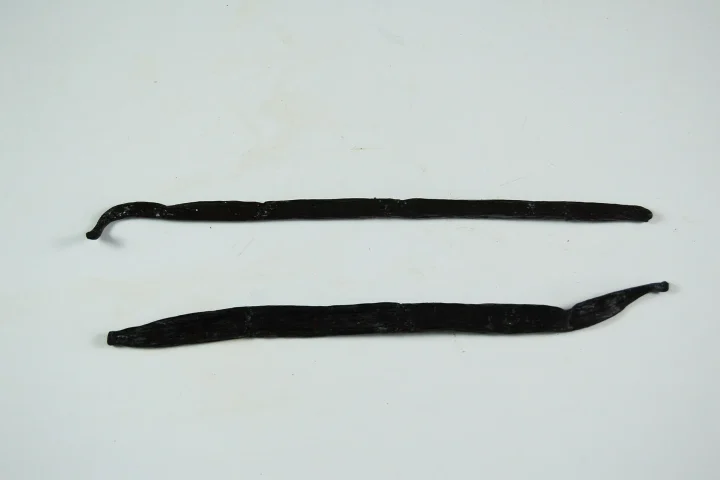
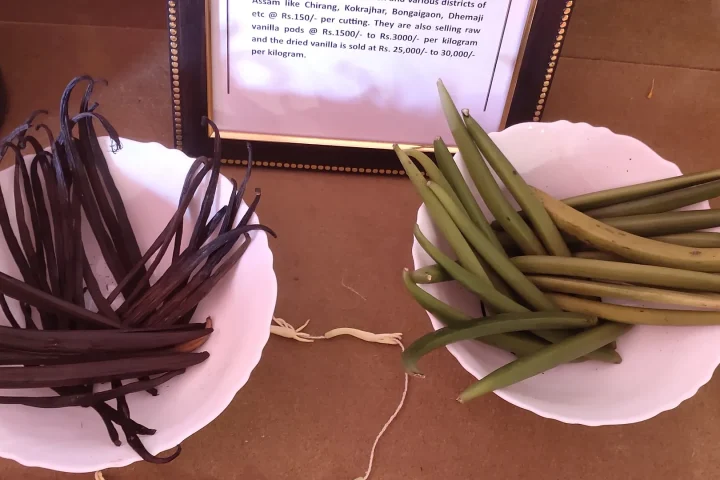
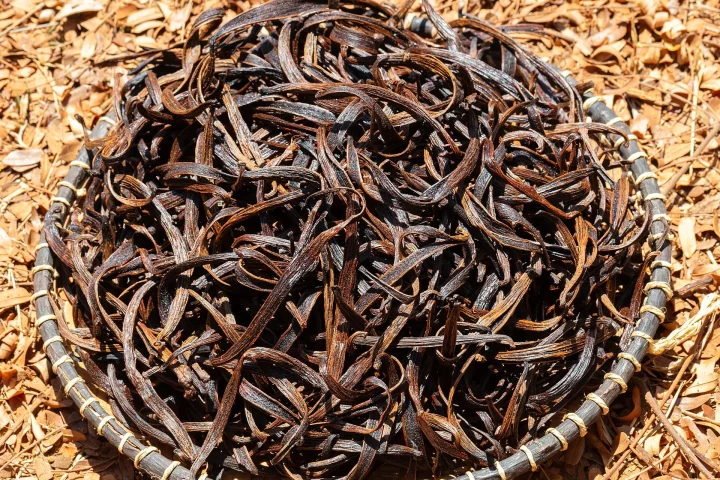
Lay the beans flat and measure pod length. Grade A gourmet Planifolia is quoted in defined length bands, so check the sample against the band you were promised rather than judging by eye. Look for a uniform dark chocolate-to-black color, an unbroken skin, and a visible oil sheen across the pod surface. A dull, matte, or reddish-streaked pod suggests under-curing or age. Note any splits, mold spots, or cuts — minor surface imperfection is normal, but it should be disclosed in the grade description, not discovered by you.
Step 2 — Aroma Test
Warm a single bean between your palms for ten seconds, then smell it at a few centimeters’ distance. Properly cured Indonesian Planifolia presents a deep, creamy, slightly woody vanilla profile. What you are screening against is just as important: smoky notes can indicate rushed heat-drying, sourness or fermented odors suggest excess moisture during conditioning, and a flat, papery smell usually means over-dried or old stock. Repeat with two or three beans to check consistency.
Step 3 — Flex Test: Suppleness Without Breaking
Hold a bean at both ends and bend it slowly into a U-shape. A well-conditioned gourmet-grade bean should flex without cracking and slowly return toward its original shape. If the pod snaps, it has been over-dried and will have lost aromatic oils. If it bends like wet leather with no resistance at all, moisture may be too high for safe storage, which raises mold risk in transit. Extract-grade beans are drier by design, so judge a Grade B bean against its own grade, not against a gourmet pod.
Step 4 — Cut Test: Inspect the Caviar
Slice one bean lengthwise and open it flat. Inside you should find a dense, glossy, oily mass of dark seeds — the caviar. Scrape it with the knife tip: it should gather into a rich paste, not crumble into dry dust. Sparse, pale, or dry caviar means low yield for your application, whatever the outside of the pod looks like. This step most often separates a photogenic bean from a genuinely valuable one — cut our samples open; that is what they are for.
Step 5 — Simple Moisture Check
Without lab equipment, you can still form a useful moisture estimate. Weigh five beans, leave them unwrapped in a dry room for 48 hours, and weigh them again. Significant weight loss suggests the beans arrived wetter than a stable conditioned state. A gourmet bean should also feel supple and slightly oily, never wet or sticky. Precise moisture percentage belongs on the COA — your hands-on check confirms the paperwork is honest, it does not replace it.
Step 6 — Compare Your Findings Against the COA
Now place your notes next to the Certificate of Analysis supplied with the sample. Check that the stated length band matches what you measured, that the declared moisture range is consistent with your feel-and-weight observations, and that the vanillin figure was measured on this lot rather than quoted as a generic marketing range. A trustworthy exporter publishes a measured vanillin value per lot, because vanillin varies naturally between harvests. Any mismatch between the physical sample and the document is a negotiation point at best and a disqualifier at worst.
Step 7 — Small-Scale Application Test
Finally, test the beans in the way you will actually use them: a small extraction batch, a test bake, or an infusion. Sensory performance in your application is the only result that matters commercially. Document your process and yield so you can repeat the identical test when the trial order arrives. This turns a subjective impression into a repeatable acceptance standard.
Why We Teach Buyers to Grade Our Own Beans
Few exporters publish the checklist that could disqualify their own product. We see it differently. Bali Vanilla Export operates under Juara Holding Group — you can read more about the group on the Juara Holding about page — and the standard across the group is simple: an informed customer is a long-term customer. Buyers who evaluate rigorously reorder based on evidence, not persuasion — the only kind of relationship worth building in a commodity as variable as vanilla.
What to Do If a Sample Falls Short
A failed evaluation is information, not the end of the conversation. Tell the supplier exactly which step the sample failed and ask what corrective lot they propose. A serious exporter responds with lot-specific data and a replacement sample, not excuses. If our beans fail your evaluation, send us the photographs and your notes — that feedback loop is how our curing partners improve season over season.
How Our Sample Program Works
You can put this protocol to work immediately through our vanilla bean sample order program. Samples are shipped by air with the lot COA included, pricing is available on request, and the sample cost is credited against your first trial order — so evaluating us properly costs you nothing if you proceed. Samples come from the same lots we quote for trial orders — a sample that does not represent the shipment defeats the purpose.
Commercial information only. Pricing, tariff codes, phytosanitary rules and import requirements change between seasons and destination markets — confirm current figures and documentation with your customs broker, freight forwarder and the competent authority in your import country before contracting. This page is not legal, tax or trade advice.
Frequently Asked Questions
How many beans do I need to evaluate a sample properly?
A workable minimum is around ten beans: several for visual, aroma, and flex checks, at least one for the cut test, five for the moisture weight check, and the remainder for your application trial. Ask for a sample size that supports destructive testing — evaluating without cutting a bean open is not a real evaluation.
Can I evaluate vanilla samples without any lab equipment?
Yes. Steps one through five need only a knife, a scale, and your senses; step six is a document check. Measured vanillin and precise moisture should already appear on the exporter’s COA — your job is to confirm the physical sample is consistent with it.
Should gourmet and extract-grade samples be judged the same way?
The steps are identical but the pass criteria differ. Gourmet Grade A beans should be supple, oily, and visually clean, while Grade B extract beans are drier and may show cosmetic imperfections without being defective. Always evaluate against the stated grade and its published specification.
What is the biggest red flag in a vanilla sample?
A mismatch between the physical beans and the paperwork. Attractive beans with a generic or missing COA are riskier than average beans with honest, lot-specific documentation, because the mismatch tells you how the supplier will behave when a full shipment has a problem.
Does the sample cost really come off my trial order?
Yes. When you proceed from sample to trial order with us, the amount you paid for the sample shipment is deducted from the trial invoice. Sample pricing and current lot availability are shared on request through our business development desk.
Order Your Evaluation Samples
The fastest way to test everything in this guide is to run it on real beans. Message our export desk on WhatsApp at wa.me/6281139414563 or email [email protected] with your target grade and application, and we will prepare a documented sample pack — COA included — with the cost credited against your first trial order.