For extract manufacturers, cost per fold — not price per kilogram — is the number that decides which vanilla beans to buy. Using indicative 2027 benchmarks of US$20–50/kg for Grade B extraction beans and US$30–80/kg for Grade A gourmet beans, Grade B typically delivers comparable flavour strength at a meaningfully lower raw-material cost per litre of extract. What you are actually buying is extractable flavour dissolved in a bean that also contains water and fibre, so two lots at the same price can deliver very different value once measured vanillin and moisture are on the table. This guide shows the maths: how vanillin percentage and moisture drive yield, how to compute cost per fold, where the break-even point sits, and a complete 100-litre batch calculation built on Certificate of Analysis (COA) data rather than marketing claims.
How Vanillin % and Moisture Drive Extraction Yield
Two variables dominate yield in a solvent extraction:
- Vanillin percentage. Vanillin varies by lot, origin, and curing quality — which is precisely why Grade A and Grade B pricing is quoted in ranges tied to vanillin content and pod quality. A lot at the top of its vanillin range delivers proportionally more flavour per kilogram at the same purchase price.
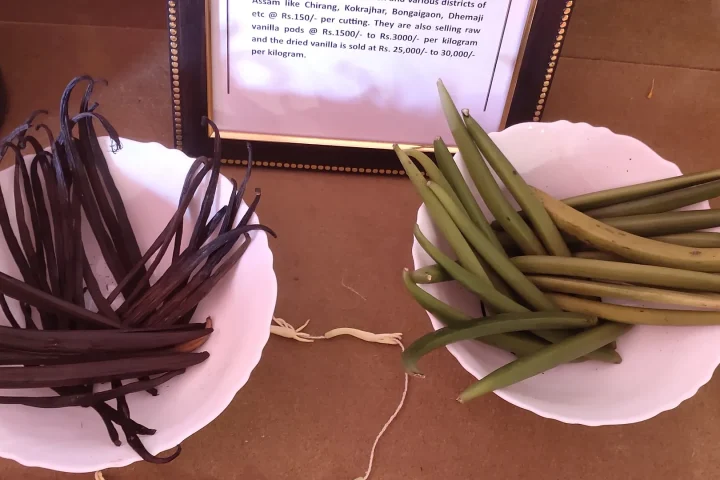
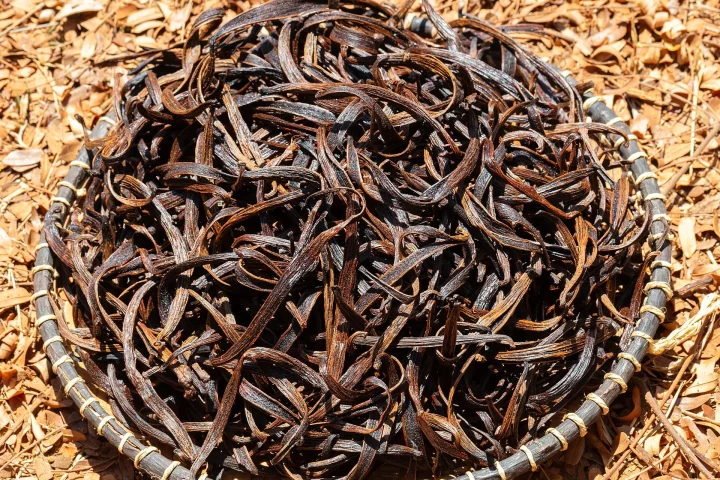
- Moisture content. Gourmet-grade beans are cured to stay supple and attractive, so they carry more water; extraction-grade beans are drier. Water contributes nothing to your extract, so a kilogram of drier beans contains more extractable dry matter. Indonesian curing — the long sweating, drying, and conditioning process — is managed specifically to control moisture, and the COA moisture figure tells you how much of each kilogram is actually bean solids.
Put simply: yield per kilogram is vanillin % multiplied by dry-matter fraction. Both numbers should come from lot-specific lab data, which is why we publish measured ranges for our lab-tested vanilla beans with COA specifications rather than generic grade claims.
Indicative 2027 Price Benchmarks: Grade A vs Grade B
The benchmarks below reflect current market research on Indonesian Planifolia; all figures are indicative and final pricing is confirmed per lot on request.
| Input | Indicative price (per kg) | Typical use |
|---|---|---|
| Grade A gourmet Planifolia | from US$30 up to US$80, by vanillin and pod quality | Whole-bean retail, culinary, premium extract lines |
| Grade B extraction Planifolia | from US$20 up to US$50, by vanillin and pod quality | Extract, paste, powder, flavour manufacturing |
| Indonesia wholesale benchmark (broad market) | US$14.76–36.90 (2026 indicative range) | Mixed grades and origins |
Indonesian trade data imply an average export value of roughly US$46/kg across all vanilla shipped in 2025 — premium, well-cured lots trade well above commodity levels. Note the overlap between the two grade ranges: a high-vanillin Grade B lot can cost more than a low-end Grade A lot, and for an extract maker that premium is often justified.
The Cost-per-Fold Framework
A fold is a concentration unit: more bean material in a given volume means a higher fold. For batch costing:
Cost per fold per litre = (kg of beans required per litre per fold) × (price per kg)
To compare grades fairly, adjust for what each actually delivers:
Effective flavour cost = price per kg ÷ (vanillin % × dry-matter fraction)
The grade with the lower effective flavour cost wins, regardless of sticker price. Below we use a common working assumption of roughly 100 g of beans per litre for single-fold extract (about 10 kg per 100 L); your standard of identity, solvent system, and target fold may differ, so treat the structure as the takeaway and substitute your own parameters.
Worked Example: A 100-Litre Single-Fold Batch
Illustrative assumptions: 10 kg of beans per 100 L single-fold batch; Grade A at an indicative mid-range US$55/kg; Grade B at US$35/kg; both lots COA-verified for vanillin.
| Line item | Grade A batch | Grade B batch |
|---|---|---|
| Beans required (single fold, 100 L) | 10 kg | 10 kg |
| Indicative bean price per kg | US$55 | US$35 |
| Bean cost per batch | US$550 | US$350 |
| Bean cost per litre of extract | US$5.50 | US$3.50 |
| Saving per 100 L batch | — | US$200 (about 36% lower) |
At ten batches per month, that mid-range scenario saves an indicative US$2,000 monthly — US$24,000 a year — on raw material alone, before the moisture advantage. For double-fold product the bean quantity doubles and the absolute saving doubles with it. This is why Grade B extract-grade vanilla beans are the default input for most industrial extract programmes: the visual perfection you pay for in Grade A — uniform length, supple pods, flawless appearance — dissolves away in the tank without adding flavour.
Adjusting for Moisture: The Dry-Matter Correction
Now add the moisture effect. Suppose, illustratively, the Grade A lot’s COA shows 32% moisture and the Grade B lot 25%. Dry matter per kilogram is 0.68 kg versus 0.75 kg — the Grade B kilogram carries about 10% more bean solids, widening the gap further in its favour. The general rule: with similar vanillin percentages, the drier lot is cheaper per unit of flavour even at the same headline price. Run this correction from the actual COA figures of the lots you are quoted, never from grade-level averages.
Break-Even: When Does Grade B Stop Winning?
Grade B is not automatically cheaper per fold — it wins only while its effective flavour cost stays below Grade A’s. The break-even condition is:
Price B ÷ Price A = (vanillin B × dry matter B) ÷ (vanillin A × dry matter A)
Three practical scenarios follow from this:
- Typical case — Grade B wins. Comparable vanillin levels plus a 25–40% lower price per kg (the mid-range benchmarks above) make Grade B clearly more economical for extraction.
- Edge case — low-vanillin Grade B. A Grade B lot at the bottom of its vanillin range priced near US$50/kg can be worse value than a Grade A lot at US$55–60/kg with substantially higher measured vanillin. Run the formula first.
- Non-extraction uses. Where part of your output is whole-bean or visible-seed product, appearance matters, Grade A earns its premium, and the fold calculation no longer applies.
The discipline is simple: never compare prices without the vanillin and moisture numbers beside them.
Sourcing Checklist for Extract Manufacturers
Before committing to a volume contract, confirm the following with any Indonesian supplier:
- Lot-specific COA covering measured vanillin and moisture — the two inputs your cost model depends on.
- Grade consistency across shipments, so a repeat order performs like the sample you tested.
- Traceability to origin — Bali, Alor, and Papua lots with documented farm-of-origin data.
- Export documentation — vanilla ships under HS code 0905 with phytosanitary paperwork; a supplier who handles this routinely protects your production schedule.
- Packaging for sea freight — vacuum-sealed, food-grade packing with oxygen absorbers for container volumes; air freight for urgent samples.
- Sensible volume tiers — sample, trial, and container options, as set out on our page for bulk vanilla beans for food manufacturers.
Commercial information only. Pricing, tariff codes, phytosanitary rules and import requirements change between seasons and destination markets — confirm current figures and documentation with your customs broker, freight forwarder and the competent authority in your import country before contracting. This page is not legal, tax or trade advice.
Frequently Asked Questions
How many kilograms of vanilla beans do I need for 100 litres of single-fold extract?
A common working assumption is roughly 100 g of beans per litre, i.e. about 10 kg per 100 L single-fold batch, with double-fold requiring around 20 kg. Confirm the ratio against the standard of identity and fold definition that applies in your market and to your product specification.
Is Grade B vanilla lower quality than Grade A?
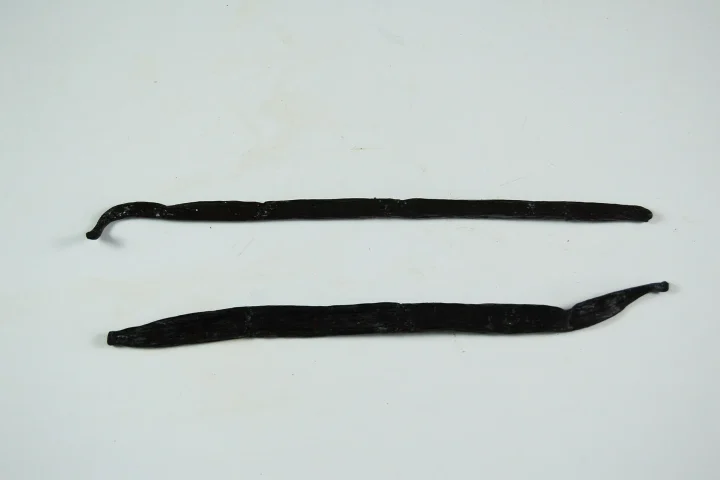
Not for extraction. Grade B beans are drier and less visually uniform, but flavour compounds are what an extractor buys, and a well-cured Grade B lot with solid measured vanillin performs excellently in the tank. Grade A’s premium pays for appearance and suppleness — attributes that matter for gourmet whole-bean use, not for extract.
What vanillin percentage should I specify when ordering extraction beans?
Specify a measured range confirmed by a lab COA for the specific lot, not a generic grade-level claim. Vanillin varies by lot and curing quality, so per-lot testing is the only way to run an accurate cost-per-fold comparison between quotes.
How much cheaper is Grade B per litre of extract?
In the mid-range worked example above — indicative US$35/kg versus US$55/kg — Grade B reduces bean cost from US$5.50 to US$3.50 per litre of single-fold extract, roughly 36% lower, before counting its dry-matter advantage. Actual savings depend on the lots quoted; final pricing is confirmed on request.
Does moisture content really change my extraction economics?
Yes. Water contributes nothing to the extract, so a drier lot delivers more bean solids per kilogram purchased. Between two similar-vanillin lots, a few points of moisture difference can change which quote wins. Read the COA moisture figure, not just the price.
Get a Grade B Volume Quote
If you are costing an extract programme for 2027, we supply COA-backed Grade B Indonesian Planifolia with lot-level vanillin and moisture data, so you can run this exact calculation on real numbers before committing. Send your target volume and fold specification via WhatsApp at wa.me/6281139414563 or email [email protected], and our export desk will reply with indicative per-kg pricing, sample options, and shipping terms for your destination.