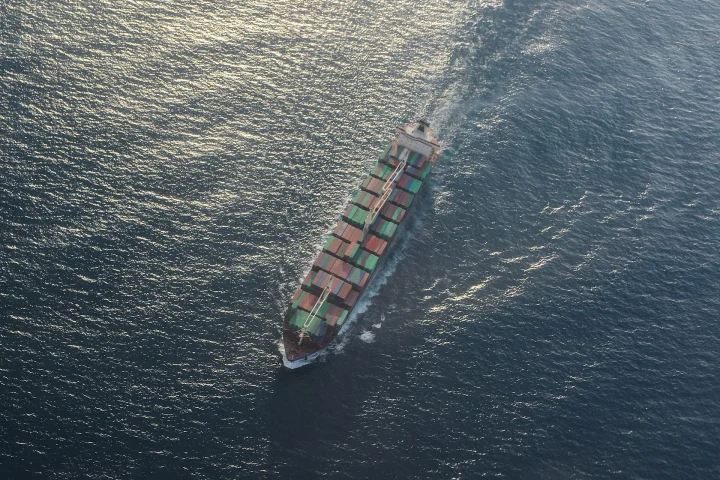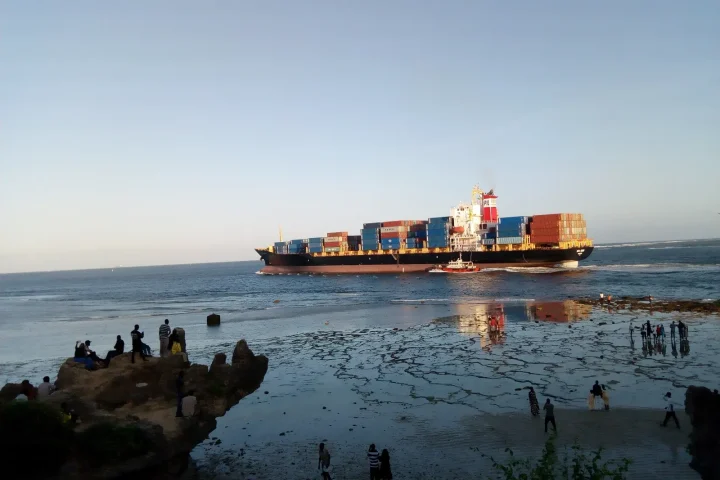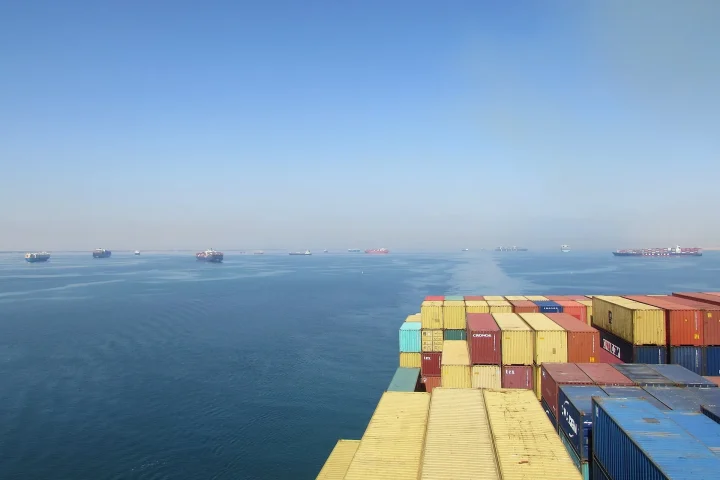
For most vanilla export orders, the sea freight vs air freight decision comes down to two variables: volume and urgency. Sea freight is the standard mode for large contracts because fully cured beans travel safely in vacuum-sealed, food-grade packaging with oxygen absorbers, while air freight is reserved for urgent samples and smaller premium lots where speed matters more than cost per kilogram.
This guide compares both modes for 2027 shipments from Bali across cost, lead time, and quality risk, then walks through our protective packaging standard, a simple decision tree, and a cargo insurance checklist. Indonesian vanilla moves under HS code 0905 with phytosanitary documentation, and the largest destination markets — the United States, France, Germany, and the Netherlands — are all long-haul routes where mode choice shapes landed cost and delivered quality.
Sea Freight vs Air Freight at a Glance: Cost, Lead Time, Quality Risk
The table below summarises how the two modes compare for cured vanilla beans exported from Indonesia. Freight rates move constantly, so treat every figure as indicative and request a live quote for your lane and volume.
| Factor | Sea Freight (LCL / FCL) | Air Freight |
|---|---|---|
| Indicative freight cost per kg | Lowest of the two modes; exact rates on request per destination | Highest per-kg cost; justified for small, high-value lots |
| Typical lead time to US / EU | Indicatively 3–6 weeks port to port, plus clearance | Indicatively 3–7 days airport to airport, plus clearance |
| Best-fit order size | Trial orders through to container-scale contracts | Samples and small premium cartons |
| Quality risk (properly packed) | Low — vacuum-sealed food-grade bags with oxygen absorbers protect beans for the full transit | Very low — short exposure window |
| Quality risk (poorly packed) | High — humidity and temperature swings over weeks can degrade aroma and invite mould | Moderate — shorter transit limits damage |
| Documentation | Full export set under HS 0905 incl. phytosanitary certificate | Same document set, faster turnaround required |
Why Sea Freight Wins for Large Vanilla Contracts
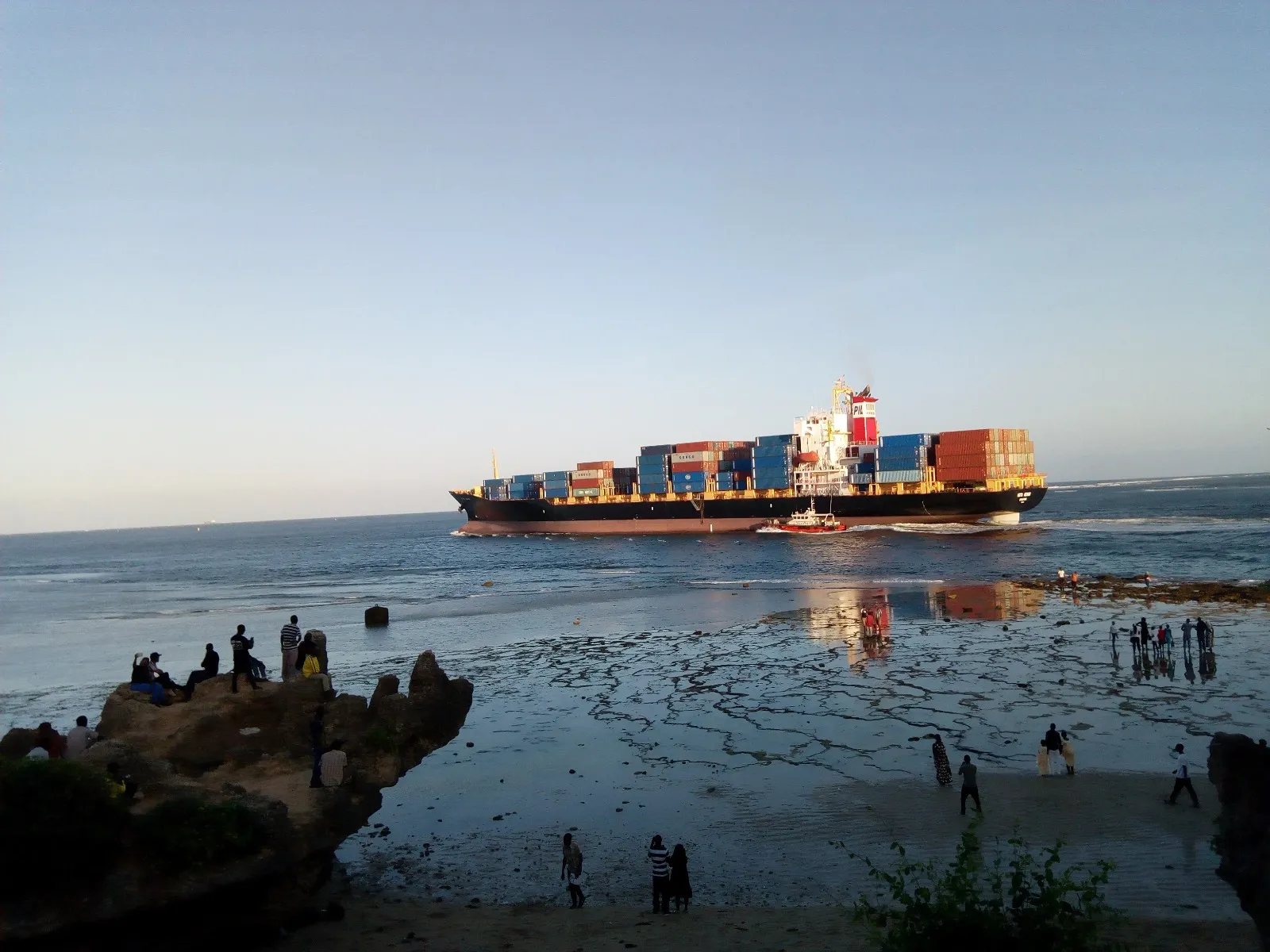
Vanilla is a high-value spice, but at container or multi-carton scale the per-kilogram freight difference between sea and air becomes significant against your landed cost. That is why food manufacturers, extract producers, and distributors buying at volume almost always ship by sea — and why our bulk vanilla beans for food manufacturers program is built around sea consolidation by default.
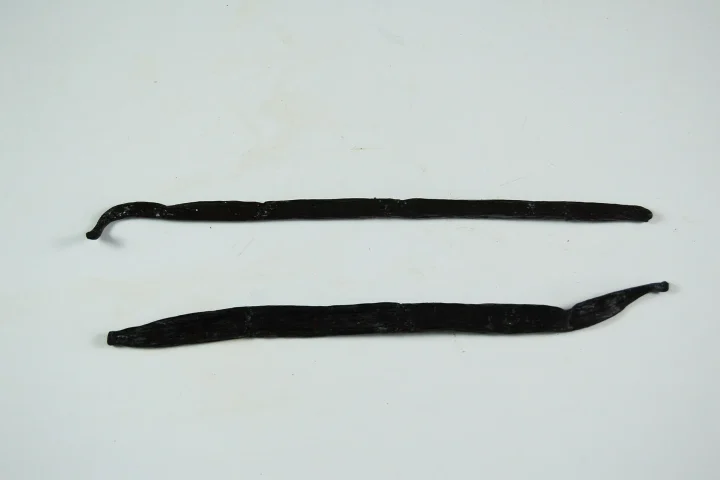
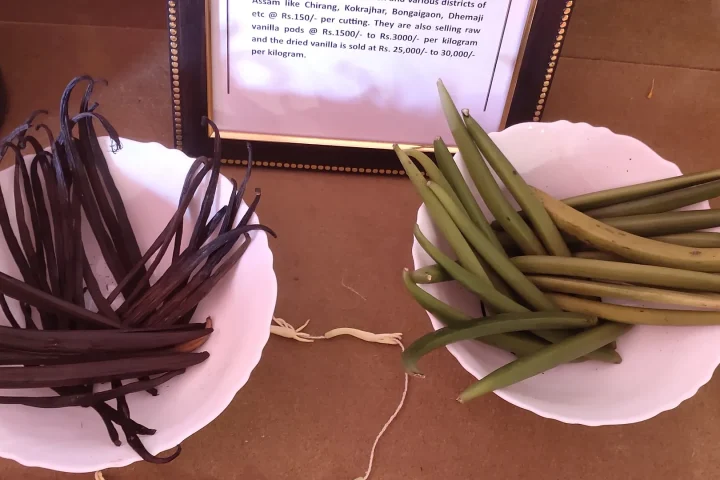
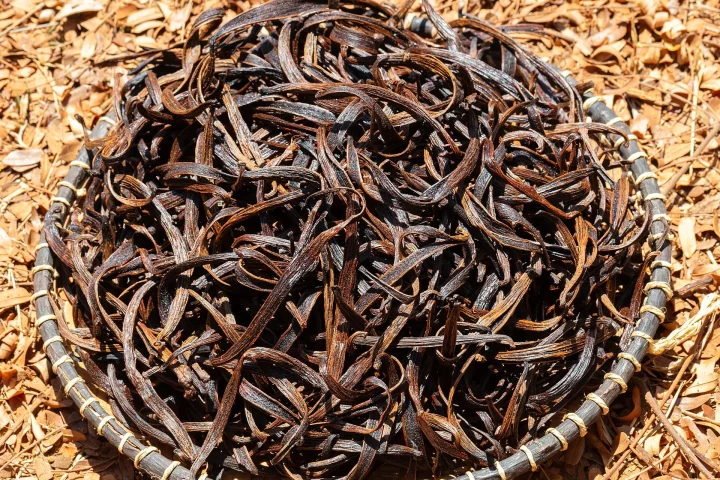
The reason sea freight is viable at all for a moisture-sensitive product is preparation. High-quality Indonesian vanilla goes through a long curing sequence — sweating, drying, and conditioning — before it is export-ready, and controlling moisture content during that process is exactly what allows beans to sit in a container for weeks without losing character. Buyers should expect fully cured, conditioned beans for sea shipment, never green or under-conditioned pods.
Grade also matters here. Extract-grade Grade B beans, indicatively priced from US$20 per kg depending on vanillin content and pod quality, are usually purchased in volumes where sea freight is the only economical option. Grade A gourmet beans, indicatively from US$30 per kg, ship by sea when the order is large and by air when the buyer needs a fast, small replenishment.
When Air Freight Is the Right Call
Air freight earns its premium in three situations. First, evaluation: when a buyer needs to assess aroma, moisture, length, and vanillin range before committing, an air-freighted sample arrives in days rather than weeks — this is how our vanilla bean sample order program ships every evaluation lot. Second, urgency: a production line waiting on beans cannot absorb a multi-week ocean transit. Third, small premium lots: freight cost stays manageable even at air rates, and the short exposure window keeps quality risk near zero.
Air freight is rarely a substitute for sea on recurring volume: once a lot is validated by air sample, repeat orders almost always move to sea to protect margin.
Our Protective Packaging Standard
Whichever mode you choose, packaging is the single biggest controllable quality factor. Our export standard for cured beans is:
- Vacuum-sealed, food-grade barrier bags that lock in moisture equilibrium and aroma while blocking external humidity.
- Oxygen absorbers inside each sealed unit to suppress oxidation and microbial activity over long ocean transits.
- Lot-labelled inner packs so every bag traces back to origin, curing batch, and its accompanying quality documentation.
- Rigid outer cartons sized for air shipment or palletised sea consolidation, protecting pods from crushing and handling damage.
This is the same packaging system regardless of mode — the difference is simply how long it must perform. The full handling flow, from conditioning room to port or airport, is described on our shipping and export page, including the document set that travels with each consignment: commercial invoice and packing list under HS 0905, phytosanitary certificate issued through official quarantine channels, and lot-level certificates of analysis on request.
Decision Tree: Which Mode for Your Order?
Use this quick sequence to match mode to order profile:
- Is this a first evaluation? Yes → air freight a sample lot. No → continue.
- Do you need the beans in production within two weeks? Yes → air freight, sized to bridge until a sea shipment lands. No → continue.
- Is the order a small premium lot of Grade A gourmet beans? Yes → air freight is usually still economical. No → continue.
- Is this a trial, repeat, or contract volume? Yes → sea freight with vacuum-sealed protective packaging; consolidate LCL for trial orders, FCL as volume grows.
- Split strategy for new buyers: many importers air-freight a bridging quantity while the main sea consignment is in transit — speed where it matters, economics where it counts.
Cargo Insurance Checklist for Vanilla Shipments
Vanilla’s value density makes cargo insurance worth arranging on every consignment, not just container loads. Before your shipment leaves Bali, confirm:
- Declared value basis — insure at invoice value plus freight, and agree the basis in writing before departure.
- Coverage scope — check whether your policy covers moisture and temperature-related deterioration or only physical loss and damage; the difference matters for a hygroscopic product.
- Incoterms alignment — know exactly where risk transfers under your agreed terms, so both sides insure their leg of the journey without gaps.
- Packing compliance clause — some policies require professional export packing; our vacuum-sealed standard supports this, and photos of packed lots are supplied before sealing.
- Claims documentation — keep the packing list, phytosanitary certificate, and pre-shipment photos accessible; claims move faster with a complete file.
This checklist is general guidance, not legal or financial advice. Coverage terms and import regulations vary by country and policy, so verify your specific shipment with a licensed insurance broker and a qualified customs professional in your destination market.
How This Fits a 2027 Sourcing Plan
With the United States, France, Germany, and the Netherlands leading demand for Indonesian vanilla, most of our buyers run the same rhythm: air-freighted samples for validation, an LCL sea trial order, then scheduled FCL or consolidated sea shipments as the relationship matures. As part of the Juara Holding Group network — see the group profile at juaraholding.com — we coordinate the export documentation, packaging, and freight booking end to end, so your team only has to decide volume and timing.
Frequently Asked Questions
Which is cheaper for vanilla export, sea freight or air freight?
Sea freight is significantly cheaper per kilogram and is the default for trial orders and contract volumes. Air freight costs more per kilogram but remains sensible for samples and small premium lots. Exact rates are on request per destination and volume.
Does sea freight damage vanilla bean quality?
Not when beans are fully cured, conditioned to the right moisture level, and sealed in vacuum food-grade packaging with oxygen absorbers. Quality problems on ocean routes almost always trace back to under-cured beans or inadequate packaging, not the mode itself.
What is the minimum order for each shipping mode?
We publish separate thresholds for sample lots, trial orders, and container or air-carton shipments rather than one generic MOQ. Samples ship by air under our sample program; trial and contract volumes move by sea. Current MOQ details are available on request.
What export documents travel with a vanilla shipment?
Every consignment ships under HS code 0905 with a commercial invoice, packing list, and phytosanitary certificate issued through official quarantine channels. Lot-level certificates of analysis covering moisture and vanillin range are provided on request, and destination-specific paperwork is prepared per market.
Can I combine air and sea freight in one order?
Yes — a common structure for new buyers is an air-freighted bridging quantity for immediate production needs while the main sea consignment is in transit. We plan both legs under one contract so specifications and lot documentation stay consistent.
Plan Your 2027 Vanilla Shipment
Tell us your destination, target volume, and timeline, and we will recommend the right mode, packaging configuration, and indicative freight plan for your order. Message our export desk on WhatsApp, or email [email protected] and we will reply with a tailored sea vs air comparison for your lane.