Vanilla beans are traded internationally under HS code 0905, and in the five major destination markets for Indonesian vanilla — the United States, the European Union, Japan, China, and Singapore — whole cured beans generally clear customs at low or zero base import duty. The real cost of moving vanilla across a border in 2027 is rarely the tariff itself: it is the phytosanitary, food-safety, and traceability paperwork that must match the destination’s rules on every shipment.
This reference page explains how the 0905 code works, gives a quick-scan table of duty treatment and core documents per destination, and lists the papers that must travel with every shipment. It reflects how we prepare export files at Bali Vanilla Export, part of the Juara Holding Group family of Indonesian export companies, and should always be read alongside the official tariff database of your destination country.
What Falls Under HS Code 0905
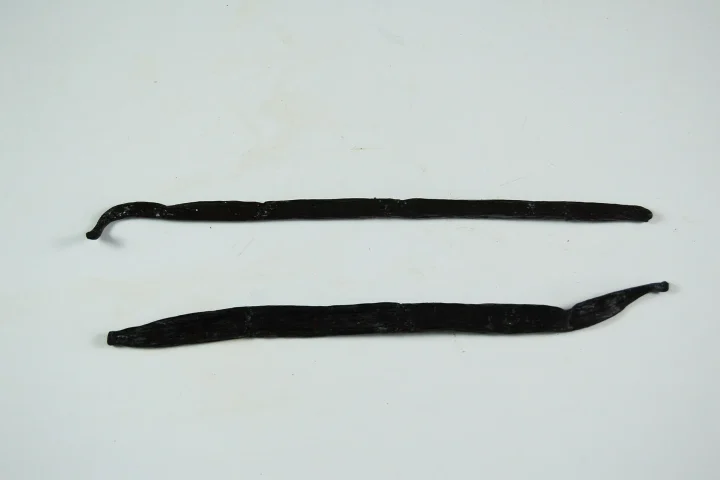
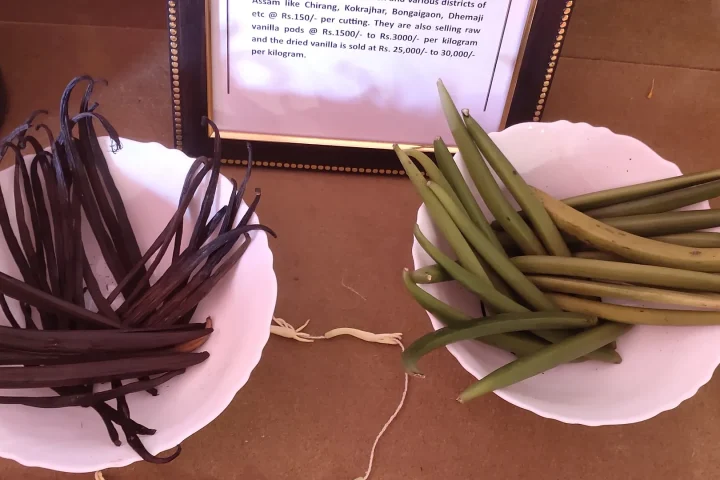
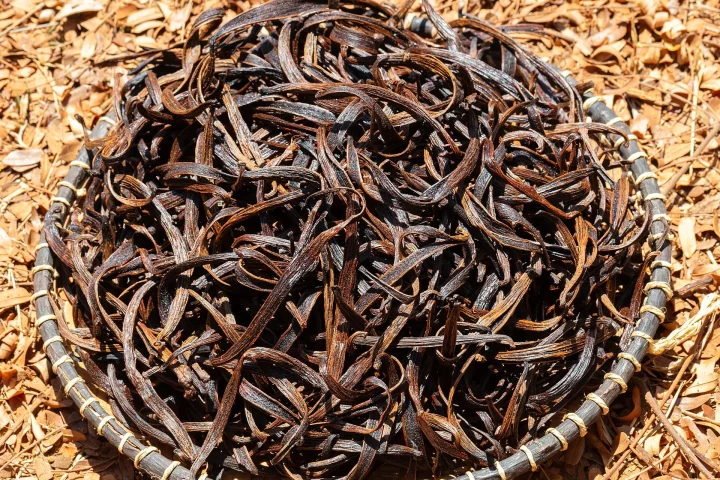
Heading 0905 of the Harmonized System covers vanilla. In practice it splits into two six-digit subheadings that matter to buyers: 0905.10 for vanilla that is neither crushed nor ground — the whole cured Grade A gourmet and Grade B extract-grade beans we export — and 0905.20 for vanilla that has been crushed or ground, such as vanilla powder. Liquid vanilla extract and flavour preparations sit outside heading 0905 entirely, so an order mixing beans and extract means two codes, two duty treatments, and often two regulatory pathways.
How to Read a Vanilla Tariff Code
Tariff codes are built in layers: the two-digit chapter (09, spices alongside coffee and tea), the four-digit heading (0905) identifying vanilla, and the six-digit subheading (0905.10 or 0905.20) harmonized worldwide. Beyond six digits, every customs territory adds its own national lines: the United States uses a ten-digit HTS number, the EU uses ten-digit TARIC codes, and Japan and China each maintain their own extended statistical lines.
The duty rate attaches to the national line, not the shared six-digit code — which is why the same pallet can face different rates and inspection regimes in two markets, and why every quotation we issue names the destination country first.
Import Duty and Document Snapshot by Destination (2027)
The table below is a working summary for procurement teams. Duty treatment for raw spices under HS 0905 is typically low or zero in these markets, but applied rates, taxes such as VAT or GST, and documentary demands change — verify each line against the official source shown before you contract.
| Destination | Typical duty treatment (HS 0905) | Core import documents | Verify with |
|---|---|---|---|
| United States | Whole raw beans commonly enter at low or zero MFN duty; confirm the current ten-digit HTS line | Phytosanitary certificate, FDA prior notice and facility registration, commercial invoice, packing list, bill of lading | US HTS schedule and FDA import rules |
| European Union | Generally low or zero for raw vanilla; confirm the TARIC line for your member state of entry | Phytosanitary certificate, food-safety compliance papers, EU-recognised organic certificate if sold as organic | EU TARIC database and national customs |
| Japan | Verify the current tariff schedule line for cured beans; premium buyers often import by air in smaller lots | Phytosanitary certificate, food sanitation import notification, commercial documents | Japan Customs tariff schedule and health-ministry import desk |
| China | Applied rate depends on the current schedule and any preferential arrangement; confirm before quoting | Overseas food-facility registration, phytosanitary certificate, quarantine inspection papers | China Customs and the GACC registration system |
| Singapore | Most goods enter duty-free; GST and food-import controls still apply | Import permit via the national trade platform, phytosanitary certificate, commercial documents | Singapore Customs and the food agency |
One consistent finding behind this table: customs, quarantine, and destination paperwork vary by shipment and by buyer market. There is no universal document pack — each export file is assembled per destination, per lot.
United States: The Largest Buyer
The US is by far Indonesia’s biggest vanilla customer: an estimated US$8.25 million of exports in 2025, and roughly 64.9% of export value back in 2022. Whole cured beans typically face a friendly duty environment, but the FDA layer is where shipments stall — prior notice, facility registration, and clean labelling all have to line up with the phytosanitary certificate issued through Indonesia’s official quarantine channels. If the US is your market, our dedicated guide for USA importers of Indonesian vanilla beans covers sourcing, specs, and the shipment flow in detail.
European Union: Premium, Paper-Heavy, Worth It
France (about US$616,000), Germany (about US$521,000), and the Netherlands (about US$330,000) led European buying of Indonesian vanilla in 2025; in 2022 Germany and the Netherlands together took over 16% of export value. EU entry runs on the TARIC code plus food-safety compliance, and any bean marketed as organic must carry certification recognised under EU import rules — a claim on an invoice is not enough. Buyers comparing origins can start with our overview of working with a vanilla beans supplier for European importers, which maps the EU document set against Grade A and Grade B specs.
Japan, China, and Singapore
Japan is a quality-driven premium market where smaller air-freight lots of high-vanillin Planifolia and Tahitensis beans are common; imports pass through a food sanitation notification alongside the phytosanitary certificate. China bought around US$289,000 of Indonesian vanilla in 2025 and requires exporting food facilities to be registered with its customs authority before goods ship — complete this weeks before booking freight. Singapore took about 2.6% of exports in 2022 and doubles as a regional hub: most goods enter duty-free, but GST applies and food imports still need a permit and clean phytosanitary papers.
Mandatory Accompanying Documents for Every Shipment
Whatever the destination, a compliant vanilla export file from Indonesia is built around the same core stack:
- Commercial invoice and packing list stating the HS code, grade, net weight, and lot numbers.
- Bill of lading or air waybill, matching the invoice exactly.
- Phytosanitary certificate issued through Indonesia’s official quarantine channels — the document destination inspectors ask for first.
- Certificate of analysis (COA) with measured vanillin content and moisture per lot, rather than a generic claim.
- Certificate of origin, where the buyer or a preferential tariff arrangement requires it.
- Organic and traceability documentation when the contract calls for it, down to farm-of-origin data.
Packing matters as much as paper: for sea freight we use vacuum-sealed, food-grade packaging with oxygen absorbers so fully cured beans arrive stable. The full walkthrough lives on our vanilla export documentation and phytosanitary guide for HS 0905.
Disclaimer — and a Free Document Check
This page is a general reference, not legal, customs, tax, or financial advice. Tariff rates, import taxes, and documentary requirements change without notice and vary by shipment, product form, and destination. Before contracting or booking freight, verify every rate and requirement against the destination country’s official tariff database and confirm the full document set with a licensed customs broker or trade-compliance professional in the import market.
Because paperwork is the top cause of delayed vanilla shipments, we offer a free document consultation: tell us your destination and volume, and we map the exact certificate set before you commit. Start from the export documentation page or message our trade desk directly.
Frequently Asked Questions
What is the HS code for vanilla beans?
Vanilla is classified under heading 0905: whole beans neither crushed nor ground ship under subheading 0905.10, while crushed or ground vanilla, including powder, falls under 0905.20. Each destination extends this to its own national line, which is what actually carries the duty rate.
Do importers pay high duties on Indonesian vanilla?
In the major markets covered here, raw vanilla under HS 0905 typically attracts low or zero base duty, so the tariff is rarely the deciding cost. Import VAT or GST, inspection fees, and the cost of correcting bad paperwork are usually the bigger line items.
Who handles import clearance — the exporter or the buyer?
Under most B2B terms, Bali Vanilla Export handles the Indonesian side: export declaration, quarantine inspection, and the phytosanitary certificate. The buyer or their customs broker clears the goods at destination; we align both sides before shipping so our documents match what their broker expects to file.
Does the paperwork change if I order vanilla powder instead of whole beans?
Yes. Powder moves under 0905.20 rather than 0905.10, and some markets apply different rates or extra food-processing requirements to ground product. Confirm the classification for each product form before requesting a quotation.
Can you guarantee the duty rate I will pay in 2027?
No exporter honestly can — applied rates are set by the destination government and can change. What we guarantee is a complete, accurate document set per shipment and indicative landed-cost guidance you can verify with your broker before signing.
Planning a shipment to the US, EU, Japan, China, or Singapore? Send your destination, target grade, and volume to our trade desk on WhatsApp at +62 811-3941-4563 or by email at [email protected], and we will return a per-destination document checklist and an indicative quotation — free, before you commit to anything.