Ethical vanilla sourcing, done properly, is a farmer partnership: a standing agreement in which the exporter pays a premium above the local farmgate price, mentors the grower through the full curing cycle, and commits to buying across several harvests instead of one opportunistic season. In 2027 that model — not spot-market trading — is how Bali Vanilla Export secures Grade A Planifolia from Bali, Alor, and Papua, and it is the reason importers in Europe and North America can verify the story behind every lot they receive.
This guide explains how the model works in practice: how premiums are structured, why curing mentorship matters most, what a medium-term harvest contract looks like, and why a documented ethical story carries direct commercial value.
Why Farmer Partnerships, Not Spot-Market Buying
The spot market is where vanilla quality goes to die. When traders appear only at harvest time, farmers are pushed to sell green pods early, curing is rushed or skipped, and nobody can say with confidence which farm a given kilogram came from. For a commodity where the United States alone imported US$8.25 million of Indonesian vanilla in 2025 — followed by premium-focused markets like France, Germany, and the Netherlands — that lack of control is a commercial liability, not just an ethical one.
A partnership inverts the logic. By committing to growers before the season starts, the exporter gains quality control at the source: pollination timing, harvest maturity, and curing discipline are agreed in advance rather than inspected after the fact. Ethics and quality assurance turn out to be the same investment, made once, upstream.
The Premium-Above-Farmgate Model
Partner farmers are paid a premium above the prevailing local farmgate price for pods that meet the agreed specification. The premium is tied to measurable criteria — pod length, defect rate, moisture, aroma, and lab-measured vanillin per lot — so growers are rewarded for exactly the attributes that international buyers pay for.
For context on where that value sits: indicative 2026 wholesale benchmarks for Indonesian vanilla ranged from roughly US$14.76 to US$36.90 per kilogram, while fully cured Grade A Planifolia from Bali trades in an indicative range of US$30–80 per kilogram and Grade B extract-grade beans from US$20–50 per kilogram, depending on vanillin content and pod quality. Exact partner premiums vary by region and season and are shared with serious buyers on request — transparency works in both directions.
Curing Mentorship: Where Vanilla Value Is Actually Made
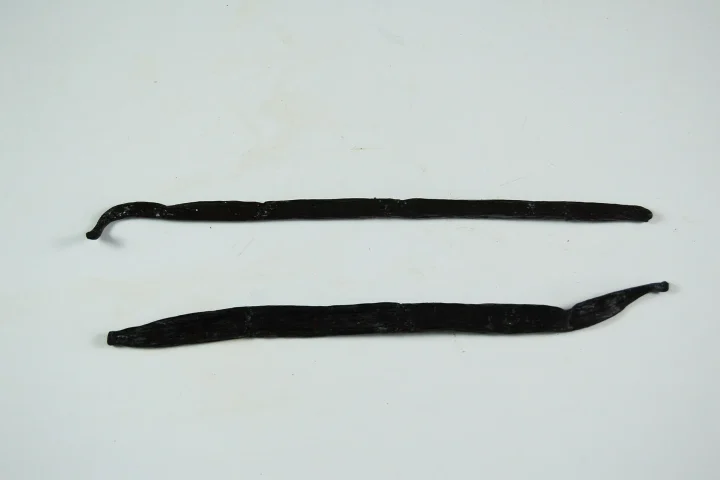
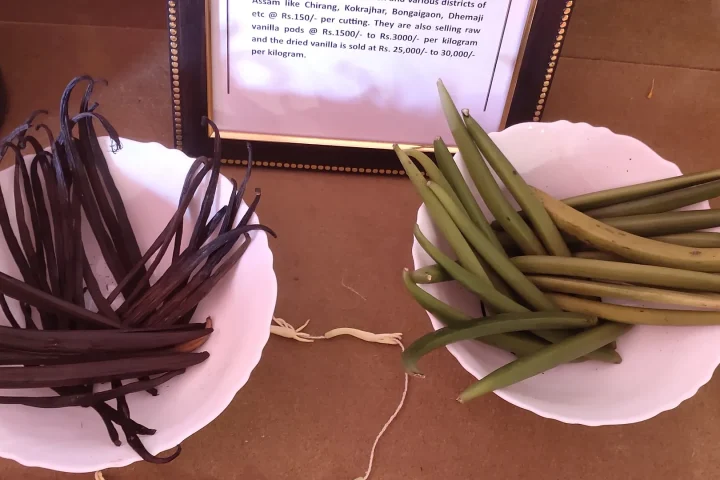
The single most important fact in vanilla economics is this: quality and value are concentrated in the long post-harvest process — pollination, harvesting, sweating, drying, and conditioning — not in the green pod itself. A perfectly grown pod that is badly cured becomes extract-grade at best; a well-managed curing cycle, with moisture brought down under control over weeks of sweating, sun-drying, and slow conditioning, is what produces the supple, aromatic Grade A bean that gourmet buyers specify.
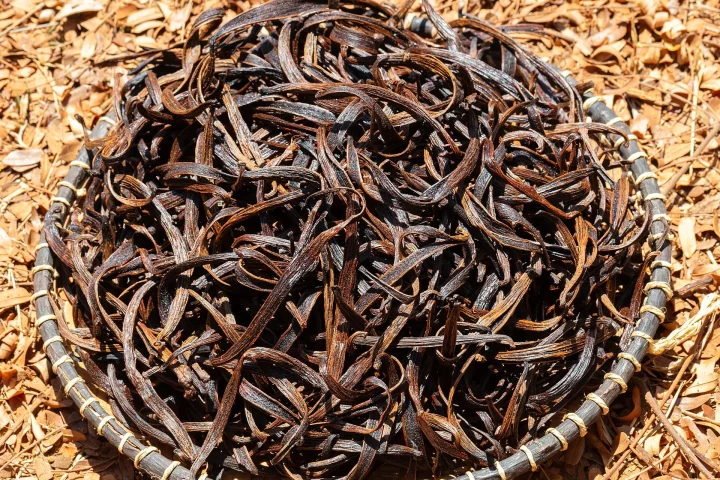
This is why curing mentorship sits at the center of every partnership. Field technicians work alongside partner farmers through the season: hand-pollination windows, harvest maturity checks, sweating-box routines, drying schedules, and final conditioning in sealed containers. The exporter buys only fully cured, conditioned beans — never green pods — so the farmer captures the value added by their own curing labor rather than surrendering it to a middleman.
Meet the Farming Partners
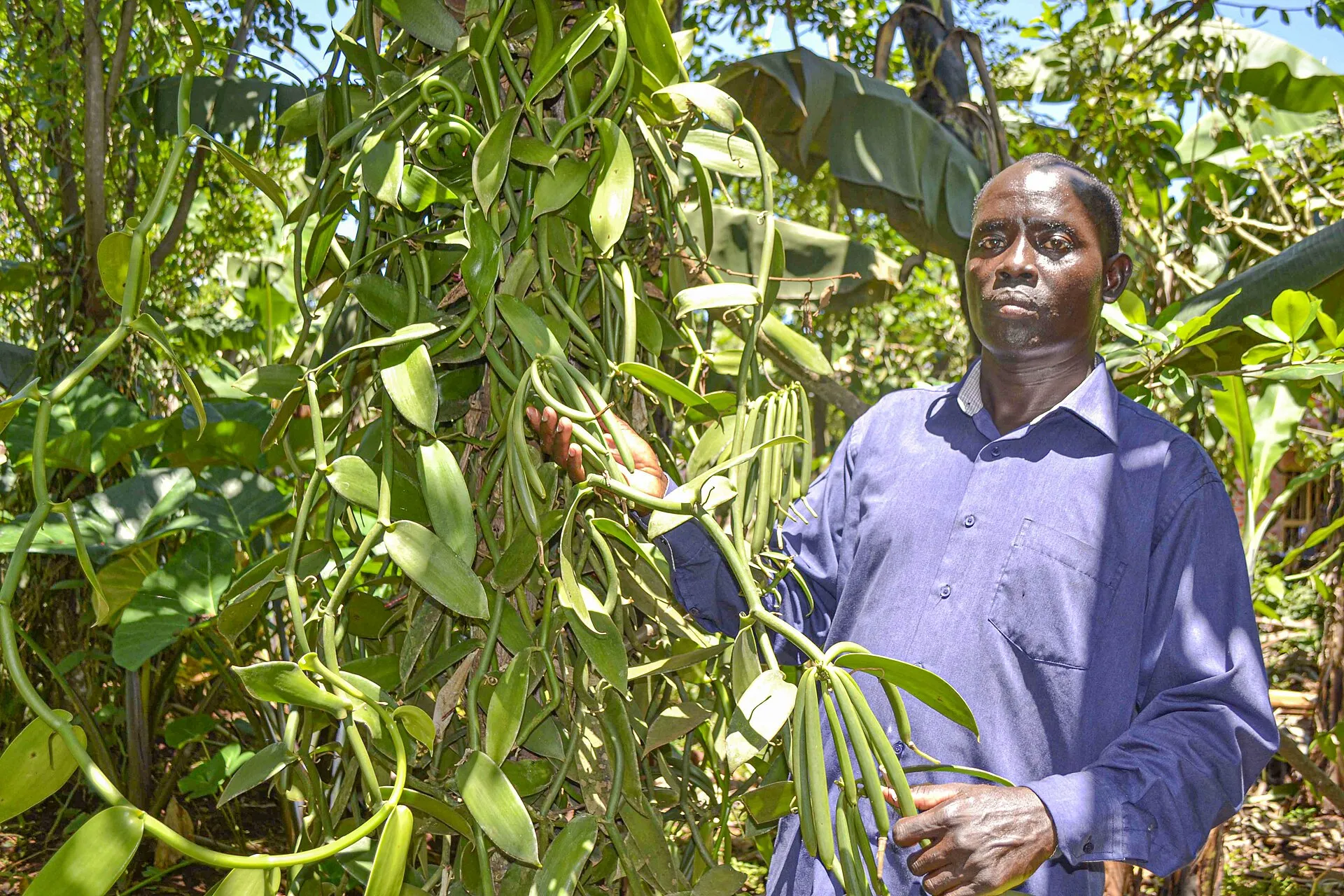
The partnership network spans three origins, each with a distinct growing profile. The regional differences between them are covered in depth in our guide to Indonesian vanilla origins across Bali, Alor, and Papua; below is how the partnerships look on the ground.
Bali — highland smallholders, hand-pollinated Planifolia
In Bali’s cooler upland districts, partner plots are typically small, family-run gardens where vanilla grows alongside shade trees. Farmers here were among the first in the network to adopt lot-level record keeping: each harvest is logged by plot, pollination date, and curing batch, which is what makes farm-of-origin traceability possible on export documents.
Alor — slow sun-drying and patient conditioning
Alor partners work with a drier climate that suits extended sun-drying. The mentorship focus here has been conditioning discipline — resisting the temptation to ship early — because beans that finish their weeks of conditioning develop deeper aroma and hold their moisture specification through sea freight.
Papua — forest-shade vanilla from remote plots
Papua partnerships involve the longest logistics chain in the network, so agreements there emphasize forward planning: harvest volumes are estimated pre-season, collection is scheduled, and curing is centralized with trained lead farmers so quality stays consistent despite the distance.
Medium-Term Harvest Contracts
One-season deals recreate the spot market with extra paperwork. The partnership model instead uses medium-term agreements — typically spanning two to three harvest cycles — that fix the grading rubric, the premium structure, and the purchase commitment in advance. Farmers get income visibility that justifies investing in vines and curing infrastructure; buyers get supply continuity and a grade profile that does not reset to zero every year.
Each contract cycle includes pre-season planning, mid-season inspection visits, and post-harvest grading against the agreed specification, with lab analysis of vanillin and moisture per lot. Disputes are rare precisely because the criteria are measurable and agreed before a single pod is picked.
Please note: this article describes commercial sourcing arrangements for general information only and is not legal or financial advice. Contract terms, export regulations, and tax treatment vary by jurisdiction and change over time — verify any agreement structure with a licensed legal or trade professional before committing.
Why EU Buyers Pay More for a Documented Ethical Story
France, Germany, and the Netherlands consistently rank among the top destinations for Indonesian vanilla, and buyers in these markets are the most demanding on documentation. They expect phytosanitary certificates for shipments under HS code 0905, organic documentation where claimed, and increasingly a verifiable answer to the question their own customers ask: who grew this, and were they paid fairly?
An ethical story that exists only in marketing copy is worthless to these buyers. What carries commercial weight is the documented version: named origin regions, lot-level traceability, premium-above-farmgate payment structures that can be explained, and QR-linked records connecting a shipment back to its curing batch. Brands pay more for beans with that paper trail because it becomes part of their own product story on the shelf. The environmental and social commitments behind the network are laid out on our sustainability page, which many EU buyers review as part of supplier vetting.
The Documentation Behind Every Partnership Lot
Every partnership lot ships with a consistent document set: a certificate of analysis stating measured vanillin and moisture for that specific lot, origin and curing-batch records, phytosanitary certification, and packing in vacuum-sealed food-grade bags with oxygen absorbers — the standard that protects quality on sea freight, while air freight remains available for samples and urgent premium lots.
Buyers who want to see the partnership output directly can start with our wholesale gourmet vanilla beans sourced direct from partner farms, where current lots, specifications, and sample options are listed. The long-term, relationship-first philosophy behind this approach runs through the whole group; the founder story of Juara Holding Group explains why every business in the ecosystem is built on multi-year partnerships rather than transactional deals.
Frequently Asked Questions
How much above farmgate are partner farmers paid?
The premium is set per region and per season against measurable quality criteria, so there is no single universal figure. Indicatively, premiums reward the attributes that command Grade A pricing — pod length, low defect rate, controlled moisture, and measured vanillin. Specific structures are shared with buyers on request as part of supplier vetting.
Can buyers visit or audit partner farms?
Yes. Origin visits and third-party audits can be arranged with advance notice, typically scheduled around pollination or harvest. Remote verification via lot records and curing-batch documentation is available for buyers who cannot travel.
Do the partnerships cover organic practice?
Selected partner plots follow organic-oriented cultivation, and documentation is provided for lots where organic status applies. Buyers with strict organic requirements should state this at the quote stage so lots are matched to certified supply; details are on our quality assurance page.
What minimum order applies to partnership lots?
Sample orders, trial orders, and container-scale contracts each have their own minimums, and these vary by grade and season. Current MOQ details are published separately and confirmed per quote — ask for the current sheet when you enquire.
How is vanillin content verified?
Vanillin is lab-measured per lot and stated on the certificate of analysis, rather than quoted as a generic range. This lot-level approach is deliberate: it protects buyers from inflated blanket claims and rewards farmers whose curing discipline produces genuinely higher readings.
Source Ethical Vanilla from the Partnership Network
If your business needs vanilla with a story you can document — premium payment structures, curing records, lot-level analysis, and origins you can visit — the partnership network was built for exactly that. Message our trade desk on WhatsApp for current lot availability and indicative pricing, or email [email protected] with your specification and destination market. We respond with real documents, not brochures.