The vanilla curing process is what transforms a flavorless green orchid pod into one of the world’s most complex and valuable spices. Understanding this process is essential for B2B buyers because curing quality directly determines the vanillin content, aromatic complexity, moisture levels, and shelf life of the finished beans you purchase. Poorly cured vanilla — rushed, improperly heated, or inadequately conditioned — will deliver inferior flavor regardless of the quality of the original green pod.
This guide details each phase of the traditional Bourbon curing method as practiced and refined by Bali Vanilla Export for Indonesian vanilla beans, explaining the science behind the process and how it affects the quality metrics that matter most to professional buyers.
Phase 1: Harvest and Selection
Quality curing begins with proper harvest timing. Vanilla planifolia pods require approximately 9 months from pollination to harvest maturity. Harvesting too early produces beans with low vanillin potential that no amount of skilled curing can compensate for. The optimal harvest indicator is the development of a yellow-green color at the blossom end of the pod, accompanied by slight splitting at the tip. At Bali Vanilla Export, our agronomists train farming communities to recognize these maturity signals and harvest at peak readiness. We reject green pods that show signs of premature harvest — this is a non-negotiable quality gate that protects the entire downstream process.
Phase 2: Killing
The first processing step is called killing — a brief heat treatment that stops the pod’s biological processes and initiates the enzymatic reactions that will develop vanillin and other aromatic compounds. At Bali Vanilla Export, we use the hot water killing method: green pods are immersed in water heated to 63-65 degrees Celsius for 2-3 minutes. This temperature range is critical. Too low, and the enzymatic process fails to initiate properly. Too high, and the delicate precursor compounds that develop into complex aromatics during later phases are destroyed. The hot water method provides the most uniform heat distribution and is preferred over sun killing or oven killing for producing consistently high-quality results.
Phase 3: Sweating
Immediately after killing, the warm pods are wrapped tightly in wool blankets and placed in insulated wooden boxes. This sweating phase maintains elevated temperatures (45-50 degrees Celsius) for 48-72 hours, creating the conditions for the critical enzymatic conversion that produces vanillin. During sweating, the enzyme beta-glucosidase breaks down glucovanillin — the odorless precursor stored in the living pod — into free vanillin, the primary aromatic compound that defines vanilla flavor. This is the single most important chemical reaction in the entire curing process. The sweating phase also initiates the development of the bean’s characteristic brown color as phenolic compounds undergo oxidation. Our curing masters monitor temperature and humidity during sweating, adjusting blanket layers and box ventilation to maintain optimal conditions.
Phase 4: Slow Sun-Drying
Following sweating, beans enter an extended drying phase that gradually reduces moisture content while allowing continued enzymatic activity and flavor development. Our drying protocol involves spreading beans on raised racks for morning sun exposure (typically 2-4 hours of gentle morning sun), then returning them to insulated storage each afternoon. This daily sun-and-shade cycle continues for 4-6 weeks, slowly reducing moisture from approximately 80% (post-sweating) to the target range of 25-35% for Grade A or 15-25% for Grade B.
The slow, gradual nature of this process is essential. Rapid artificial drying in ovens or dehydrators produces beans that are technically within moisture specifications but lack the aromatic depth and complexity that slow enzymatic development creates. Every day of sun-drying allows additional chemical reactions that contribute to the final bouquet of over 250 identified aromatic compounds in premium cured vanilla.
Phase 5: Conditioning
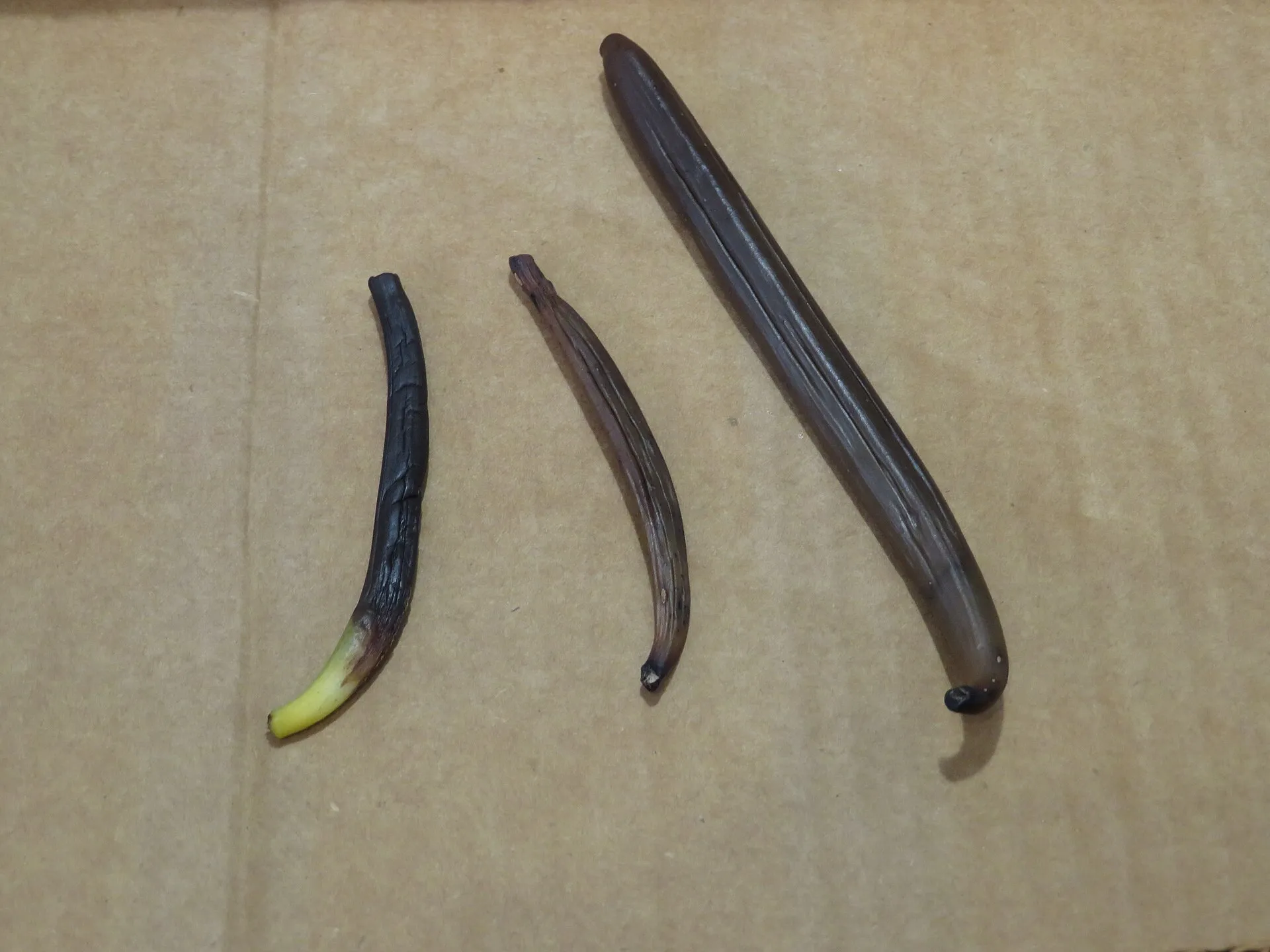
The final and often underestimated phase is conditioning — storing the dried beans in sealed wooden boxes or vacuum containers for 3-6 months. During conditioning, the diverse aromatic compounds developed in earlier phases undergo further maturation, rearrangement, and harmonization. Beans at the start of conditioning may smell intensely of vanillin but lack complexity. After 3-6 months, the aromatic profile has rounded and deepened, with secondary notes of caramel, chocolate, dried fruit, and tobacco emerging to complement the primary vanillin character.
Conditioning is what separates truly premium vanilla from commodity-grade product. Rushed curing with abbreviated conditioning produces one-dimensional beans. Patient conditioning produces the multi-layered complexity that discerning buyers demand. At Bali Vanilla Export, we condition Grade A beans for a minimum of 4 months, with premium single-origin lots conditioned for up to 8 months.
Why Curing Quality Matters for Buyers
For B2B buyers, the curing process is the single greatest variable affecting the quality of the beans you receive. Two beans from the same vine, cured differently, can produce dramatically different vanillin content, aroma profiles, and shelf stability. When evaluating vanilla suppliers, asking about their curing process — temperature controls, duration of each phase, conditioning period, and quality monitoring protocols — reveals more about likely product quality than any other single factor. A supplier who invests in slow, careful, traditional curing is investing in the quality that justifies premium pricing. A supplier who rushes the process to maximize throughput is cutting corners that will show up in your finished products.
Frequently Asked Questions
How long does the entire curing process take?
From green pod to export-ready bean, our complete curing process takes 6-9 months: 1 day for killing, 2-3 days for sweating, 4-6 weeks for sun-drying, and 3-6 months for conditioning. This timeline cannot be meaningfully shortened without compromising quality.
Can vanilla be cured artificially with machines?
While mechanical dryers and controlled-environment chambers exist, they produce beans that lack the aromatic complexity of traditionally cured vanilla. The slow, natural process of sun-drying and extended conditioning allows enzymatic reactions that artificial methods cannot replicate. Premium buyers consistently prefer traditionally cured beans for their superior flavor profiles.